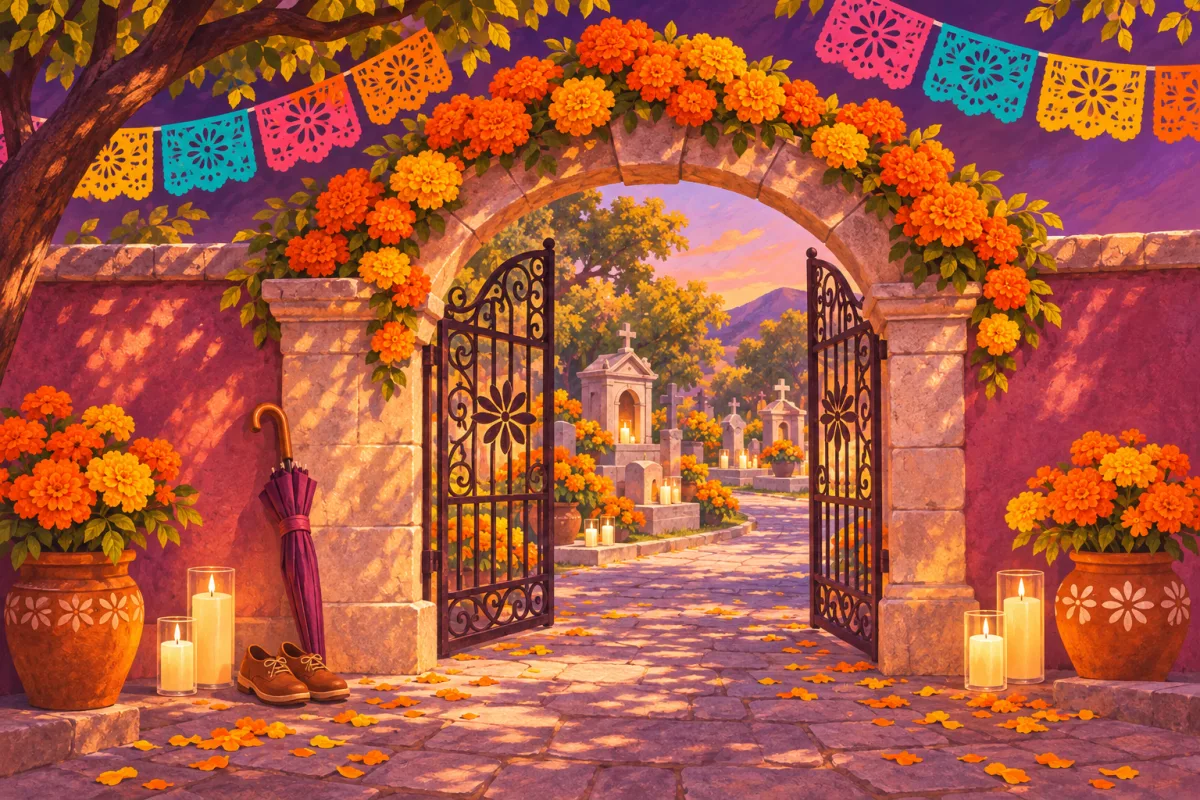
Planning an evening in a cemetery on Día de Muertos comes down to one question: how will you behave once you are through the gate? A panteón is where families gather around their own dead, and everyone else is a guest.
Rules differ by town and by year, so the examples below show a pattern, not a promise. The most useful step comes before any trip: check the local government's or organizer's current program and access notice before you book.
Whose space it is
In Oaxaca, families spend these nights at the graves. They sweep, set out flowers and favorite dishes, light candles and talk late. Music and laughter are part of it, and so is sadness. A cemetery is not staged for onlookers.
Neighboring communities keep their own customs and decide their own access, so each cemetery is its own visit.
A family vigil is a remembrance of the dead. Visitors are guests, and families and communities decide whether to grant access. Paying for a ride or a guide covers a service, not a place at someone's grave, and no responsible operator can promise a private family ceremony.
Before choosing an operator, request the itinerary and duration. Ask about camera restrictions and the operator's communication with each community. Be prepared for a route change if a family needs privacy.


How to move through a cemetery
Go slowly, and keep moving through narrow spaces instead of stopping in them. Don't interrupt a prayer, and don't ask anyone to pose.
Walk around graves, not over them, and leave candles and offerings exactly where families set them. Arrive sober.
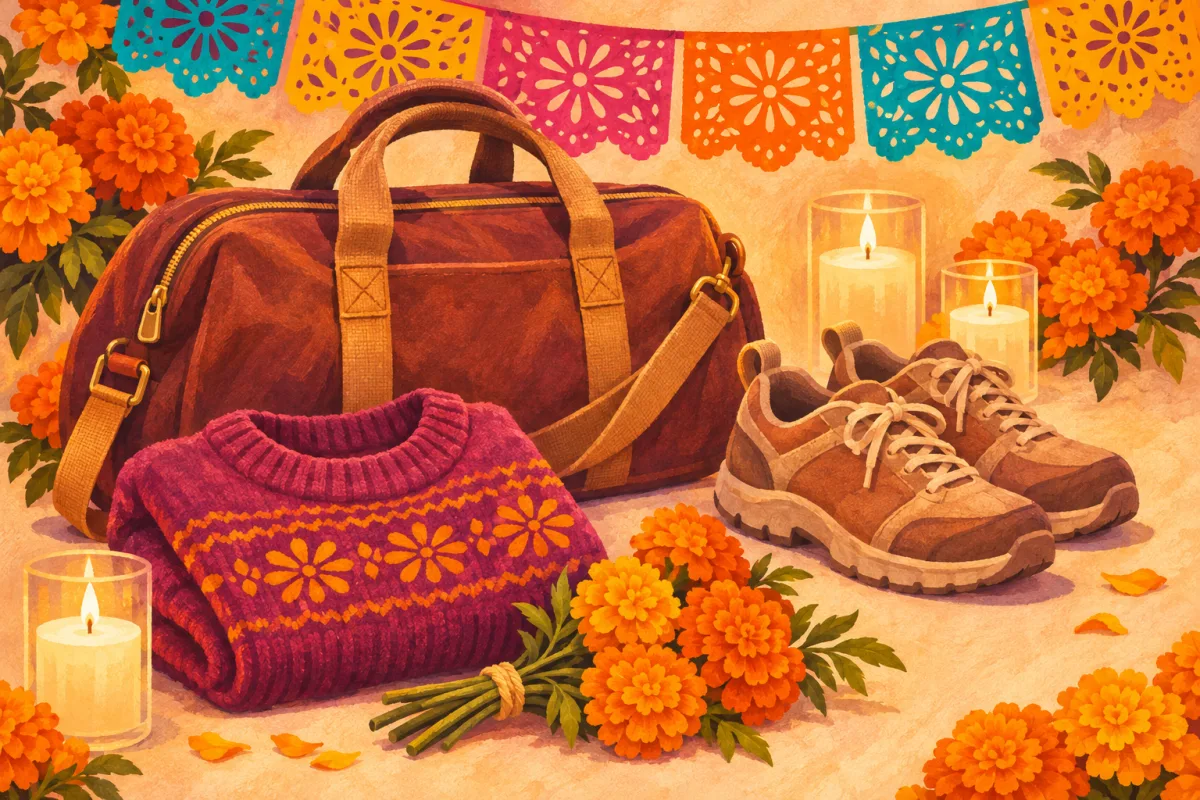
Bring little. A bag you can hold close leaves room for others, and a large tripod can block the way and may be refused.
Expect uneven ground, loose gravel, mud, cables and naked flames. Choose comfortable footwear that covers your feet, and pack something warm for the valley's cooler nights.
Crowds, brass bands, incense and smoke can be hard on visitors with mobility, breathing or sensory needs. Before booking, ask which cemetery you will visit, how far you will walk, whether there are seats and toilets, and whether you can leave early.
Arrange the journey home before setting out: traffic restrictions and competition for transport can limit your options. Charge your phone beforehand, give someone your itinerary and avoid separating from your group.
One city's rules for 2026
Oaxaca de Juárez's municipal government has set conditions for its cemeteries in the 2026 season. It bars alcohol, glass containers and fireworks, and restricts entry for anyone drunk, armed or under the effect of drugs.
That is one city's list for one year. Another town may ask for something different, so read the notice for the place you are going.
Photos: ask, accept, then lower the camera
A distant scene and an intimate portrait call for different decisions. For an identifiable person, an altar or personal possessions, get permission before composing the photograph. Children require an adult's permission too. Leave the camera lowered while you wait. "¿Puedo tomar una foto, por favor?" is enough.
A refusal ends the request: offer thanks and move on. An answer you cannot understand is not permission.
Turn off flash; its sudden light can disturb people and flatten the scene's colors. A higher ISO can help you photograph with the available candlelight.
Spend part of the visit with the camera put away. Filming nonstop turns a visit into taking: you go home with footage, and the community carries the disruption.
When you post, skip a live location tag for a small gathering and write a plain, factual caption instead of a dramatic story about living people. Choose a few pictures that show the place rather than every private moment.
Costumes belong in the street
Catrina makeup and full costume belong to public celebrations: city squares, comparsas and street shows. In a village cemetery they can feel out of place, and ordinary clothes and a calm pace sit better. Nobody needs a costume to stand quietly at the edge.
Some communities also write camera rules of their own. In 2025, San Agustín Etla's Muerteada rules included charges for outside participants wearing costumes or face paint, plus fees and advance accreditation for professional camera work. Those older rules do not establish the policy for 2026. If you carry a big lens or a video rig, check the current community rules first.
Access changes: the Janitzio example
Start with the warning. The U.S. travel advisory designates Michoacán as Level 4, "Do Not Travel". Do not book travel to Janitzio, Pátzcuaro or elsewhere in the state. The state's 2026 access announcement illustrates why an open island does not necessarily mean an open cemetery.
For Noche de Muertos 2026, Michoacán's tourism secretariat announced that the island would be open to visitors, with monumental altars and a cultural program. Its notice said the cemetery would stay closed to the general public during rehabilitation work, while island families would still enter to keep vigil over their loved ones.
The state said visitors would be able to use a viewpoint more than 3 meters high above the cemetery, set up so as not to interfere with the families. The closure was described as temporary.
The lesson travels well. Access rules can change, so check the current local notice.
Public events with their own conduct rules
In the United States, public events post their own guidelines. Albuquerque's South Valley celebration and Marigold Parade asks visitors to respect the cultural, spiritual and religious significance of the holiday. It also asks everyone to pick up their own waste, since the city and county do not collect it at the parade.
Tucson's All Souls Procession is a related tradition, not Mexican Día de Muertos. Its organizers have scheduled the 2026 procession for Nov. 8 on the city's Westside, with assembly on Grande Avenue at 4 p.m. and departure at 6 p.m. Their guide asks people not to block neighbors' driveways, stomp on flower gardens or litter the streets.
Before you go
Before you book, check the local government's or organizer's program and access notice, then check again during the week you travel, because hours, routes and access can change. Ask before photographing faces, children, altars or belongings, and take a no gracefully.
Keep the flash off, leave a large tripod behind, and save costume and face paint for street celebrations. Walk around graves, leave candles and offerings where families set them, and arrange your ride back in advance. Discuss any mobility requirements with the operator before making a reservation. For anything in Michoacán, read the U.S. Level 4 "Do Not Travel" advisory first, and do not book.
Questions readers ask
Can I photograph a cemetery on Day of the Dead?
Should I wear Catrina makeup to a village cemetery?
Can a tour get me into a family's vigil?
Sources
- Oaxacando: Oaxaca Cemetery Visits on Day of the Dead: Etiquette
- Monte Albán Heritage Center (montealbanoaxaca.com): The Ethics of Photography During Oaxaca’s Día de Muertos
- Muertos y Marigolds: 2026 South Valley Día de los Muertos Celebration and Marigold Parade
- All Souls Procession: ASP Guide - All Souls Procession
- Ocho Regiones: Oaxaca de Juárez: horarios de panteones para Día de Muertos
- Gobierno del Estado de Michoacán: Janitzio está listo para recibir a turistas en Noche de Muertos
- U.S. Embassy & Consulates in Mexico: Security Alert: U.S. Government Resumes Activities in Michoacan