You may be wondering whether you belong at a Day of the Dead event if your family is not Mexican. Start with who is doing the inviting. Some organizers issue public invitations; a family's remembrance is a different kind of gathering. An advertised event offers a starting point for participation, not permission to enter every part of the observance.
Start with the invitation
An organizer's public invitation is a useful place to start. In Albuquerque, New Mexico, the committee behind the South Valley celebration and its marigold parade uses the words "Join us" and invites participation in community art workshops. That invitation shows one way an organizer offers participation; it does not establish an unrestricted access policy or provide a complete itinerary.
The same committee describes the day as a celebration of life that honors those who have passed on.
What the holiday is about
Mano a Mano, a New York organization that has marked the holiday since 2004, describes remembrance rooted in maintaining a close relationship with the dead. Families gather at cemeteries to welcome souls on their annual visit. At home, they prepare altars with seasonal elements including marigolds, copal incense, pan de muerto, candles and sugar skulls. These offerings belong to an observance centered on the people being remembered, rather than on an audience.
So the center of the day is remembrance of particular people. When you join a public program, you are standing beside that purpose, not replacing it.
The Albuquerque organizers put the weight of it plainly: for many people this is a holiday of cultural, spiritual, ancestral and religious significance, and they ask guests to honor those beliefs and practices.
Public celebrations have a history of their own
Mexican American communities have observed the holiday in the United States for hundreds of years, often through personal ceremonies with a religious dimension. Families attended Mass, visited relatives' graves and decorated them with flowers. Sharing a picnic at a gravesite was also a practice in Mexico and Mexican American communities: remembrance could include time spent together as a family.
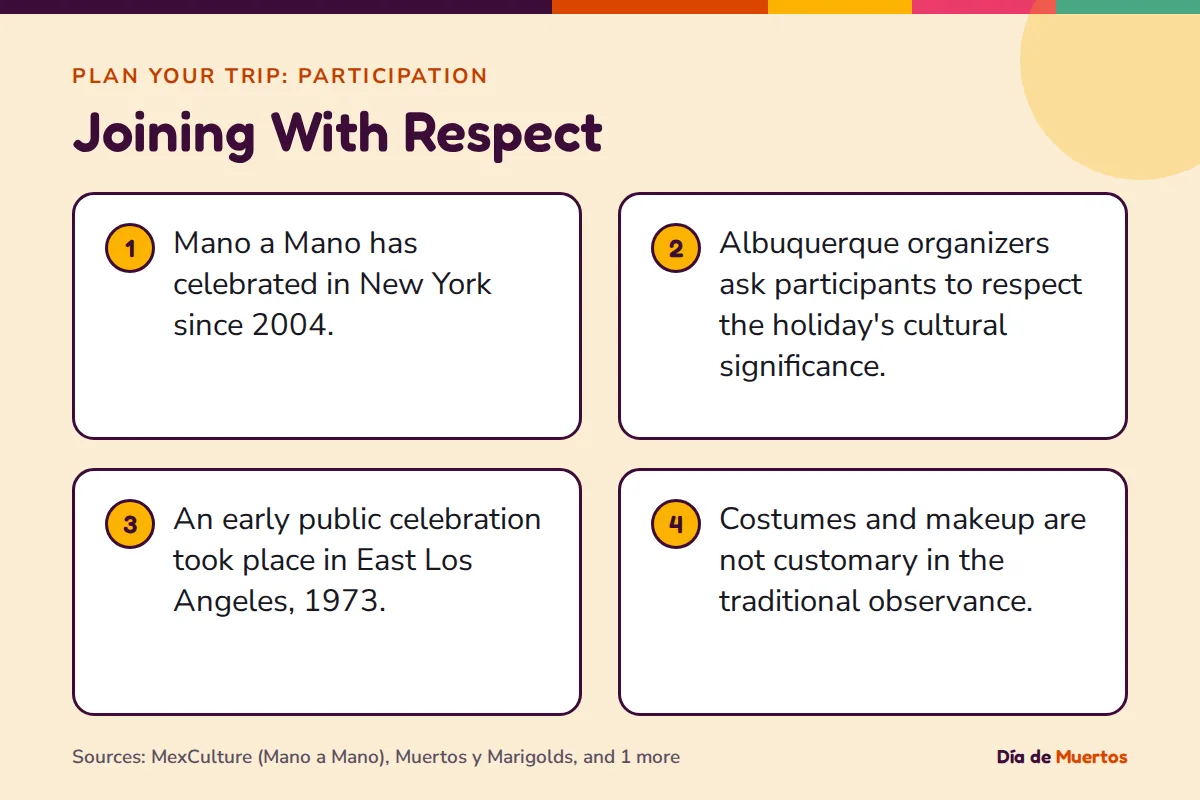
Today's large public events trace back to Chicano artists and activists, who from the 1970s used the holiday to build identity and to celebrate Indigenous roots within Mexican American heritage. One of the first modern celebrations took place in East Los Angeles in 1973, organized by a group of Chicano artists and activists with the printmaking collective Self Help Graphics & Art. It included ofrendas, a parade and artworks, and the procession ended at a cemetery altar for people lost to gang violence.
Artists including Carmen Lomas Garza also brought altar-making into gallery and museum settings, widening who could take part. Across the country, arts and community organizations increasingly host public celebrations. That public artistic history exists alongside the personal and sometimes religious traditions that Mexican American families continue to practice.
Participation can mean making and helping
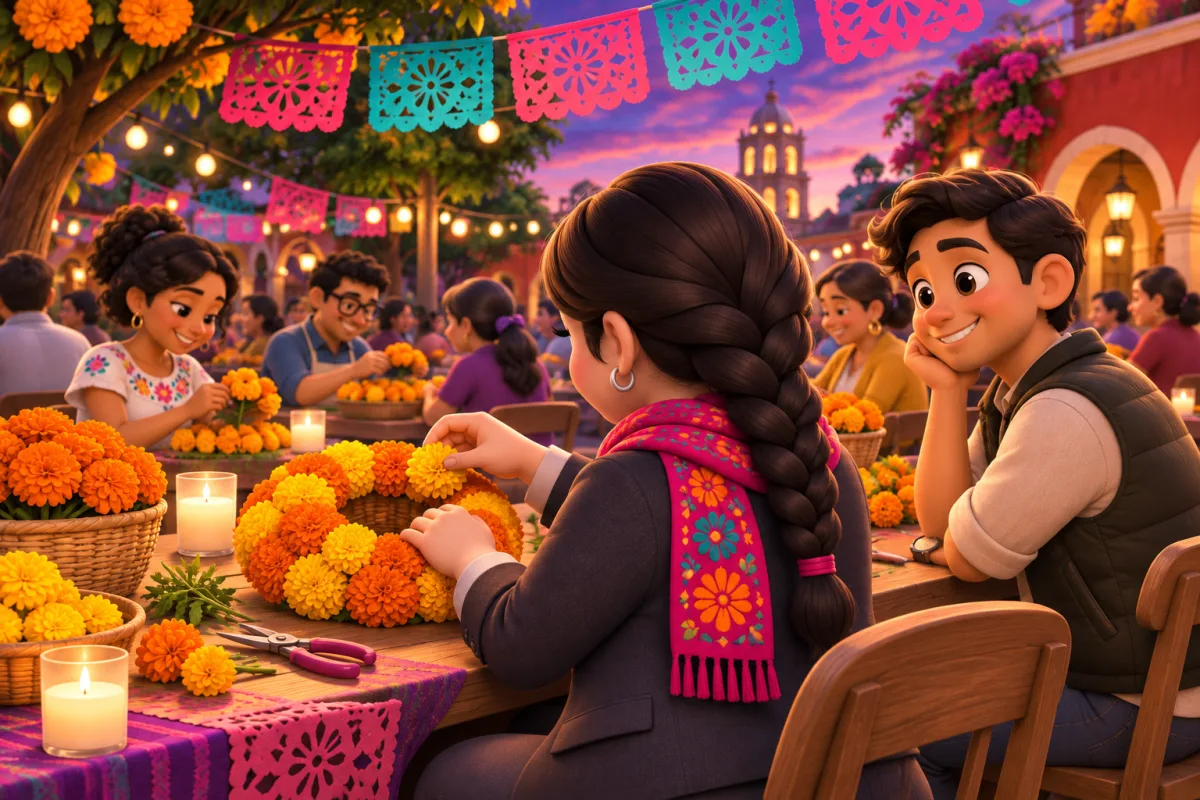
Mano a Mano's work includes teaching students about the holiday and collaborating with cultural institutions on ofrendas and workshops. Its remembrance also includes contemporary issues, public figures and community members. Participation can therefore involve learning and creating, not simply watching a procession.
The Albuquerque committee's invitation comes with responsibilities, too. Its parade guidance asks participants to collect their own waste because the City and County do not provide pickup. The organizers also describe security as minimal and ask adults not to leave belongings or children unattended.
What an invitation does not cover
An organizer's access policy belongs to that organizer, and ancestry alone does not set it. Only a family can offer an invitation to its own remembrance. A ticket to a public festival should never be understood as permission to enter a private gathering.
A personal invitation and an advertised public program are different kinds of welcome. Neither should be extended beyond what the hosts have actually offered.
Before you go
Before booking, read the organizer's current program and access instructions, including who may participate and which activities are offered. Choose an advertised public activity, such as a workshop, rather than assuming a nearby family gathering is included. Ask the hosts before placing a photo, flower or other item on an altar, and ask people before photographing them.
These are respectful recommendations, not universal Mexican rules. Costumes and makeup are not customary in the traditional family observance; a public artistic program may have its own instructions. Bring patience, keep remembrance at the center, and accept a refusal kindly. An invitation is something hosts offer, not something visitors can claim.
Questions readers ask
Can someone who is not Mexican join Day of the Dead events?
Do I need a costume or skull makeup?
Where did today's public celebrations in the U.S. come from?
Sources