For a Day of the Dead visit in Chicago, the National Museum of Mexican Art has separate listings for an exhibition and a community event called Día de los Muertos Xicágo. Their similar names can make them easy to confuse, but they describe different experiences.
The exhibition listing focuses on art and remembrance. The Xicágo announcement describes a gathering extending beyond the museum building, with community memorials and performances. Start with that distinction when deciding what kind of visit to plan.
Two offerings, not one
The exhibition centers on works from the museum's collection. Xicágo's announced program combines music, creative activities and ofrendas made by members of the community. Both concern remembrance, but a gallery visit and a gathering around the museum are not interchangeable.
The exhibition listing does not establish an extended run for Xicágo. An exhibition visit should not be taken as a promise of outdoor performances or the projected memorial described in the event announcement.
The exhibition: memory kept through art
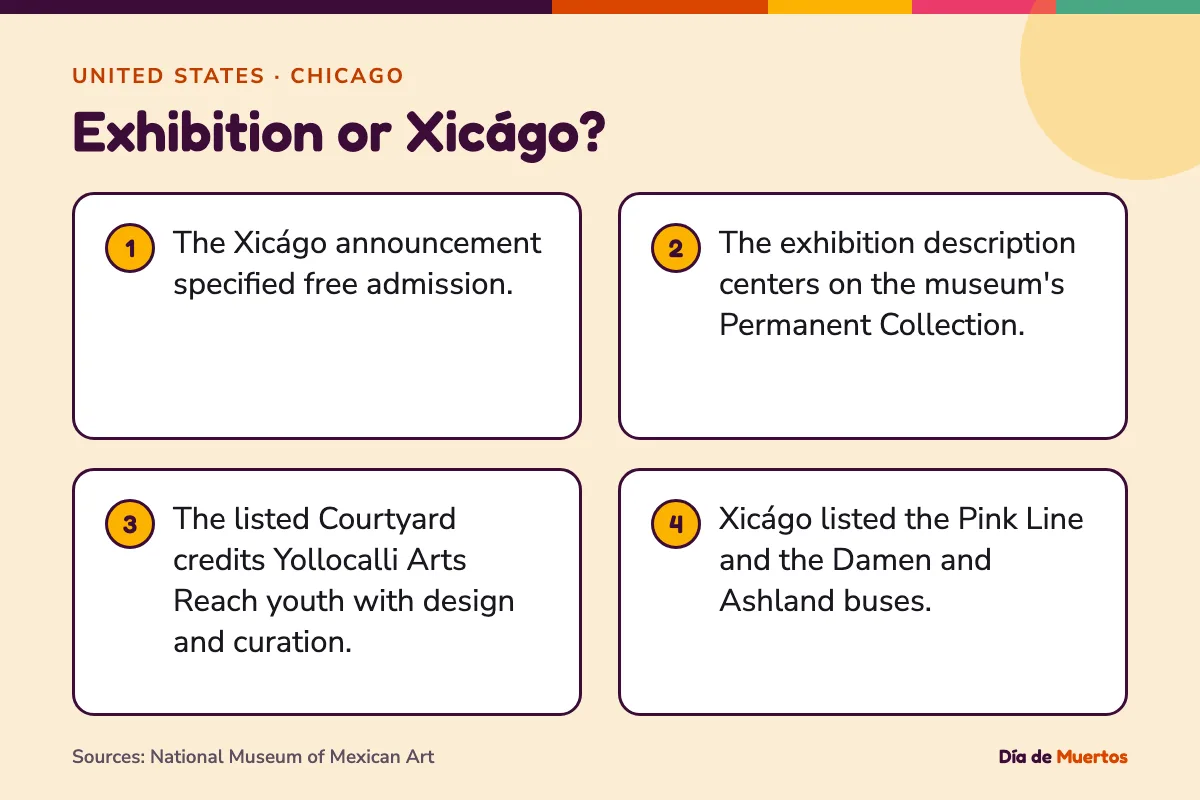
For the exhibition, the museum describes using its Permanent Collection to explore changes in Día de Muertos alongside its own development. Collecting is part of the subject, not simply a way to assemble the display: the artworks connect the institution's history with the evolving remembrance tradition.
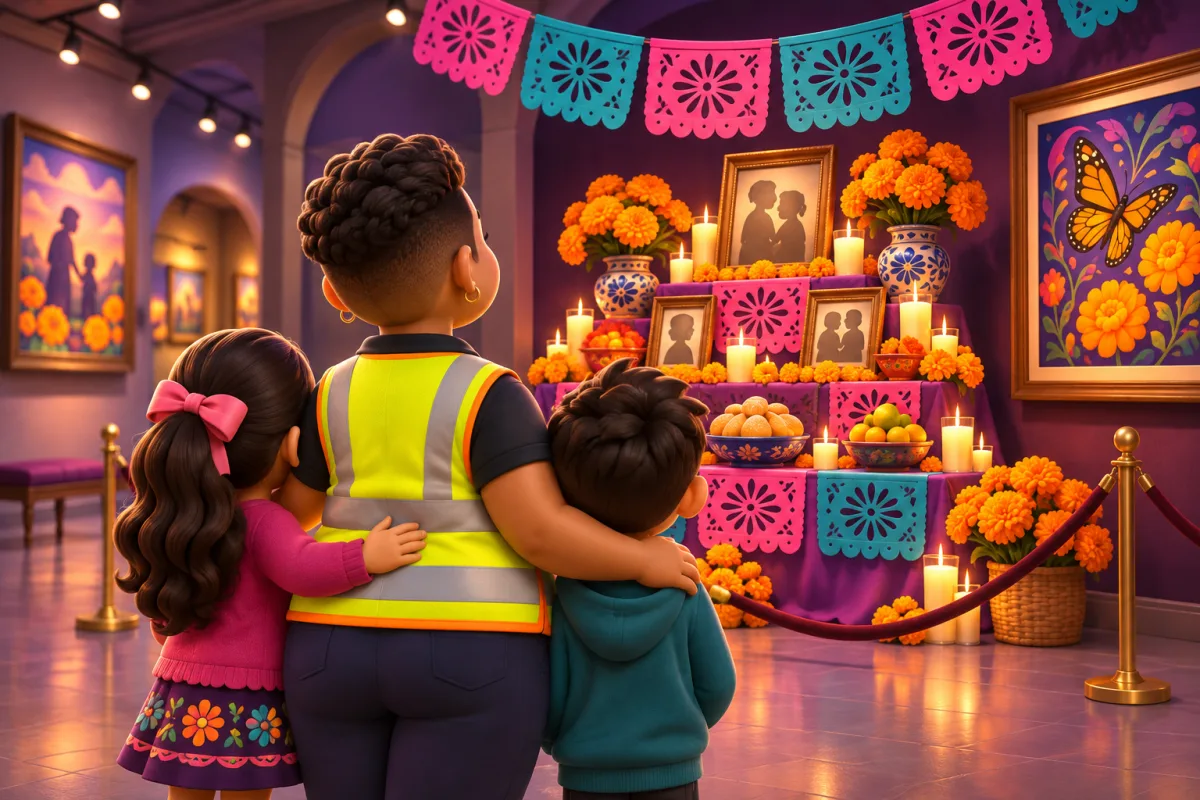
The museum connects two kinds of memory: families remembering people they have lost, and an institution caring for art. That connection gives the collection a role beyond illustration. The exhibition description presents art itself as a means of carrying memory forward.
The exhibition description places the holiday's origins in Mesoamerican belief systems and Catholic practice. It also emphasizes regional differences within Mexico. Its account extends beyond Mexico, describing Mexican families abroad as participants in a tradition of welcoming the departed and remembering their lives.
A dedication, curators and artists
The listed exhibition is dedicated to Dr. Gilberto Cárdenas. The museum identifies him as a scholar who helped pioneer Chicano Studies and as its friend. His vision helped shape the Permanent Collection. For Cárdenas, art offered a way to honor community histories and voices, including those of Mexican, Latinx and Chicana/o people in the United States.
The museum credits three curators: Cesáreo Moreno, Dolores Mercado and Elisa Soto Sánchez.
The participating artists span many generations. The names include José Guadalupe Posada, Leonora Carrington, Olga Costa, Carmen Lomas Garza and Alejandro Nava, among dozens of others. The installations and ofrendas section lists contributors tied to Oaxaca, Mexico City, Washington and Chicago, including a mural by Miguel A. Del Real.
The Courtyard and the community ofrenda
The exhibition page also describes a Courtyard space shaped by young artists from Yollocalli Arts Reach, who handled both its design and curation. Their installations draw on Día de Muertos traditions while taking a contemporary approach. This is another part of the listed exhibition experience, rather than evidence of an ongoing Xicágo festival.
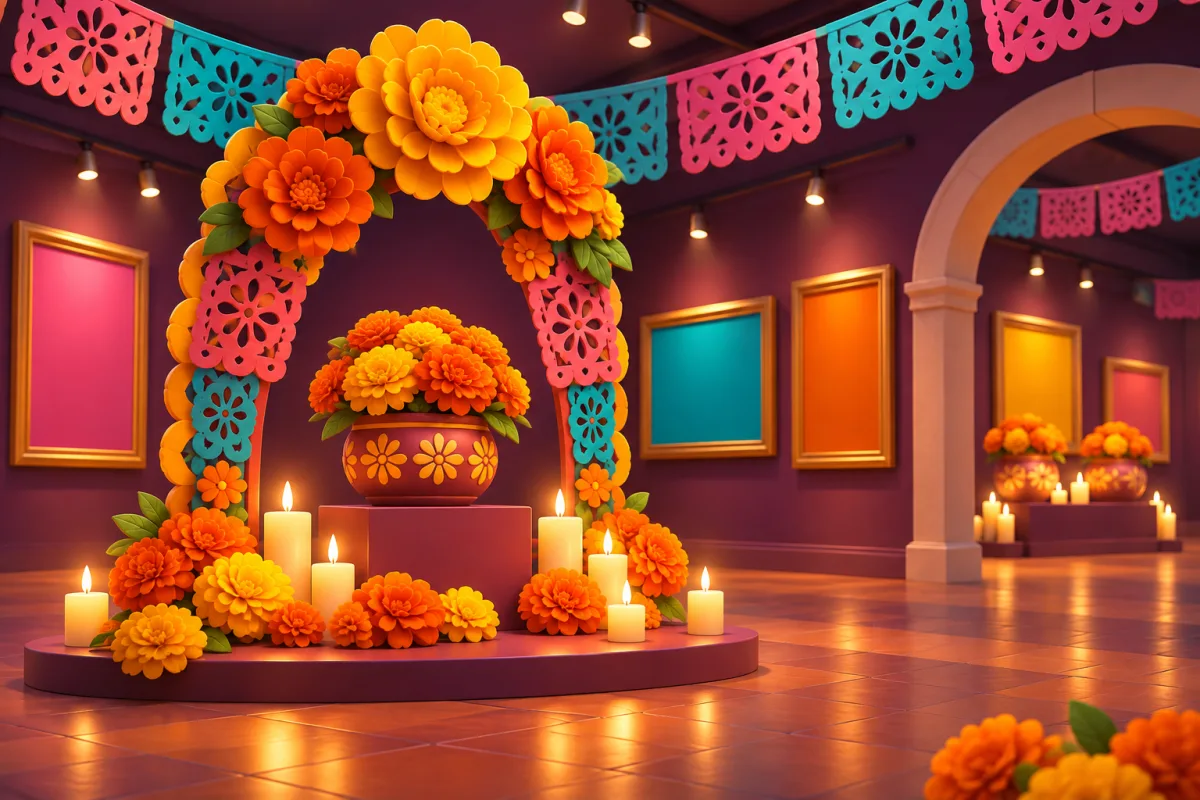
A participatory memorial appears in the exhibition description too: a community ofrenda where visitors are invited to contribute written or drawn remembrances of someone who has died. That invitation offers a way to take part through remembrance, not just through looking at the displayed work.
Xicágo: the community event
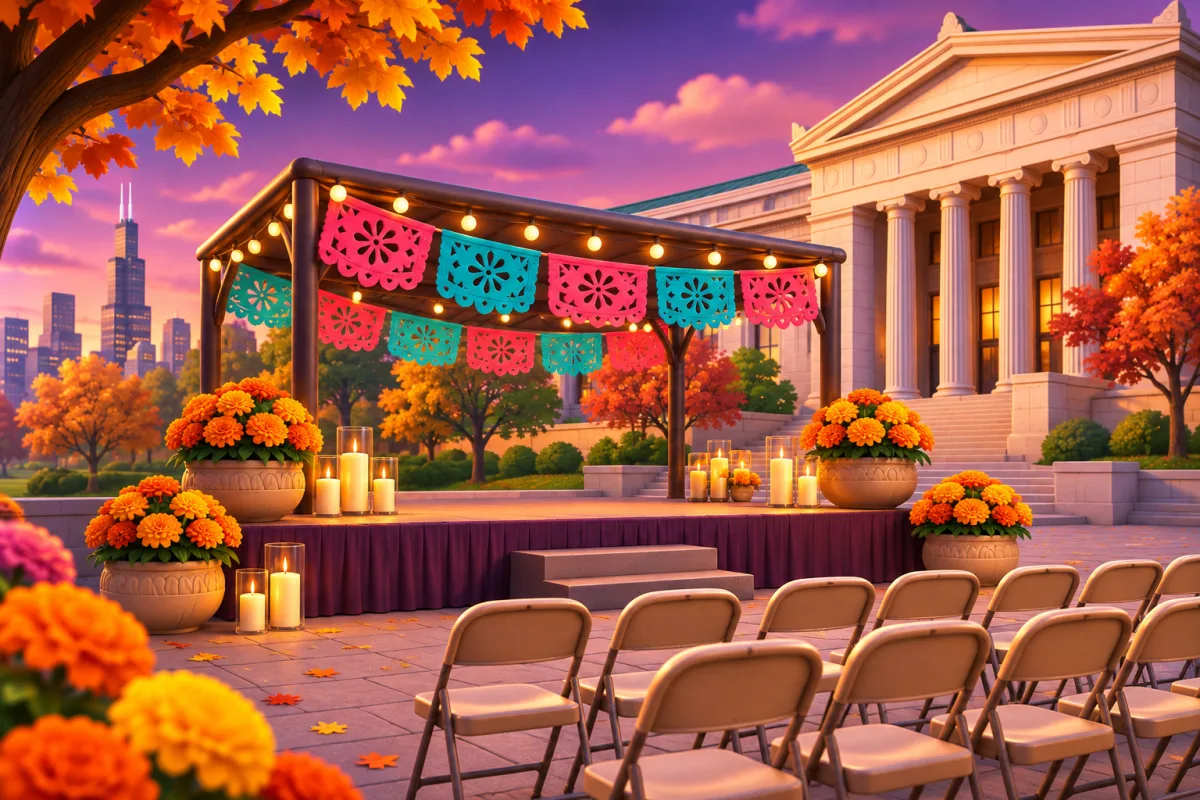
For Xicágo, the museum announced a remembrance gathering using both the building and the area around it. The planned activities ranged from making art to watching musical and other performances. Community-made ofrendas were part of the announcement, alongside a memorial projection on the outside of the museum.
For that announced program, the museum specified no admission charge and welcomed the public regardless of rain. Its performance schedule included Ballet Folklórico Back of the Yards and Mariachi Ameca. Those details belong to the listed event; they are not a standing program for every visit.
The projected memorial was planned around submitted photographs, sorted alphabetically using each remembered person's surname. The museum estimated roughly ten seconds for each image and cautioned that display times were approximate. It also announced a livestream, with viewing limited to the event rather than a recording available afterward.
Which one fits your day
For an art-centered visit, the exhibition description is the useful starting point. For a public gathering involving performances and community memorials, look for a separately announced Xicágo program. The shared remembrance theme does not mean the same activities are available on an ordinary gallery day.
The Xicágo announcement also set a gallery-entry cutoff separate from its later performance schedule. It warned that getting into line at the cutoff would not secure admission: visitors needed to be inside the galleries already. Combining the two experiences therefore required extra time, not simply arriving for the outdoor program.
Before you go
Before setting a day, check the museum's separate exhibition and Xicágo pages for current availability. Admission terms in the Xicágo announcement apply to that program, not automatically to the exhibition.
For transit, that announcement identified Damen and 18th St. as Pink Line stops. Its bus suggestions were the #50 Damen and #9 Ashland routes. Confirm service with the CTA for your travel day.
Approach ofrendas and memorial photographs as remembrances of real people. Ask permission before photographing anyone, leave offerings undisturbed and respect a refusal. If a community ofrenda invites contributions, follow that invitation and make your contribution for someone you are remembering.
Questions readers ask
What admission terms did the Xicágo announcement give?
How did the museum say to reach Xicágo by transit?
Can visitors add a memory to an ofrenda?
Sources