You have been invited to an ofrenda, or you are heading to a public Día de Muertos event, and you want to say the right thing. The words depend on the occasion: a public celebration, an invitation to discuss an altar, or a conversation with someone mourning a recent death.
Is Feliz Día de Muertos okay to say?
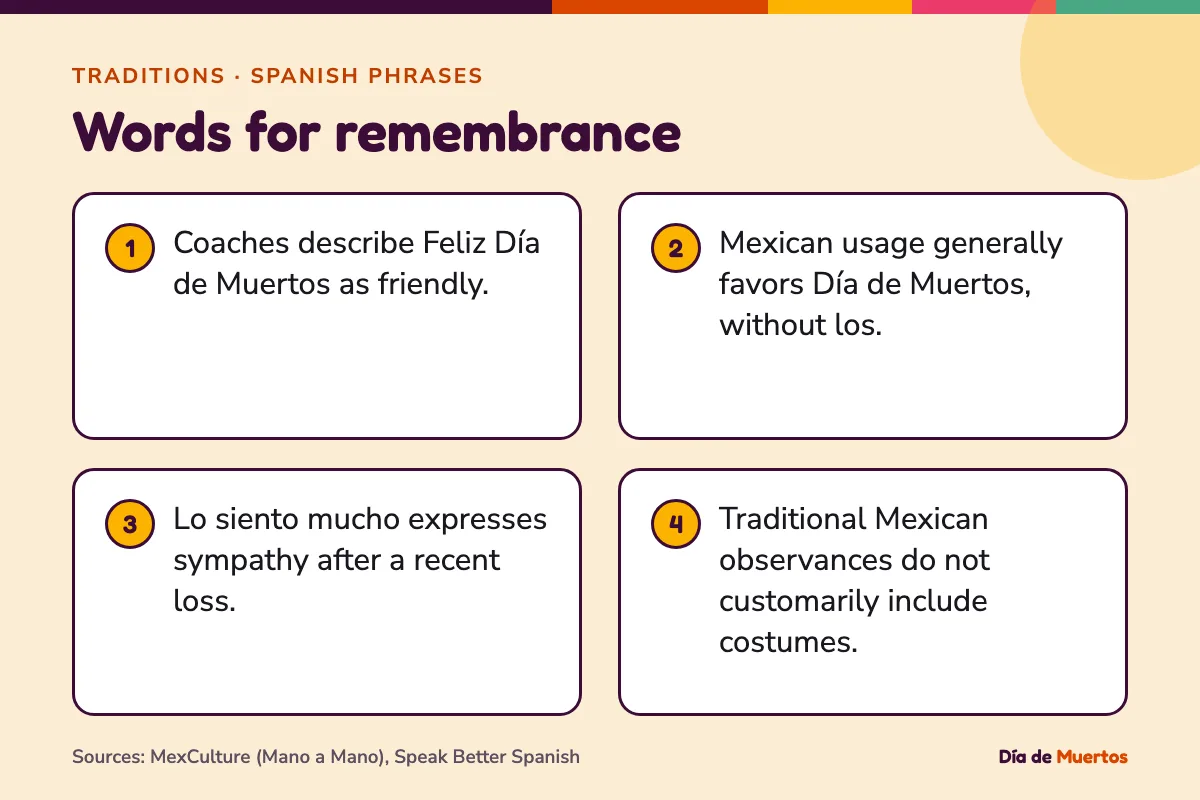
Yes. Spanish coaches describe it as a friendly, grammatically correct translation of Happy Day of the Dead, suitable for saying to a Mexican friend.
The same coaches add a caveat from their own teaching experience: it is not a set greeting in the way Feliz Navidad is, and they rarely hear it said in person. To some ears it can sound a little translated from English.
Why the greeting is less common
Arturo, a coach based in Monterrey, offers a personal explanation: the important connection is with a deceased loved one, often expressed through an ofrenda. Exchanging congratulations with other living people is not the focus.
He contrasts that with Christmas and birthdays, when congratulations are directed at the people sharing the occasion.
In his account, families can gather in celebration even when the loss happened long ago. Remembering someone need not make the whole occasion somber. Asking about an altar offers a way to begin a conversation without assuming how someone feels.
Phrases that fit
The coaches offer several possibilities rather than a formula everyone must follow. One is que vivan nuestras tradiciones. Another suggestion is que tengas bonito Día de Muertos. They also accept the shorter feliz Día de Muertos.
If a friend sends you the last one in a message, a simple reply is Gracias, igualmente, which is thank you, same to you. Plain Igualmente works too.
To invite conversation, the coaches recommend ¿Vas a poner ofrenda? It asks whether someone plans to set up an altar and leaves room for them to talk about loved ones, rather than simply return a greeting.
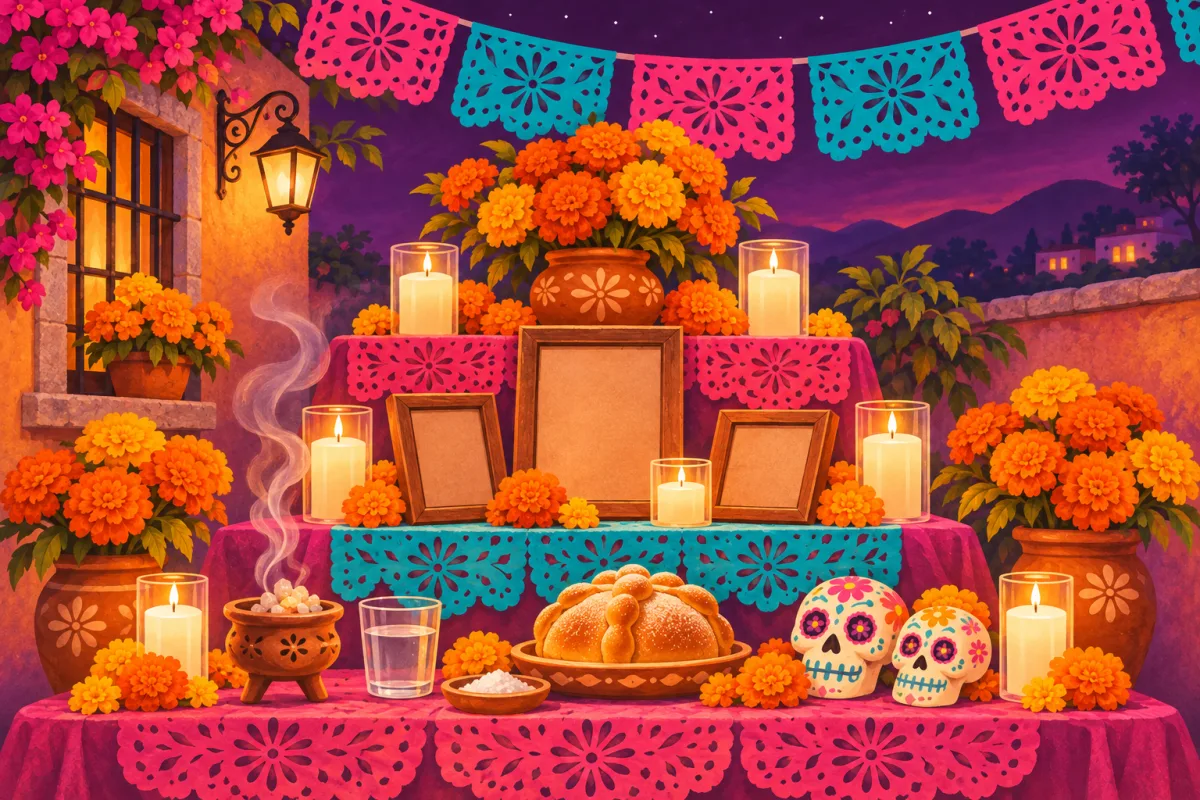
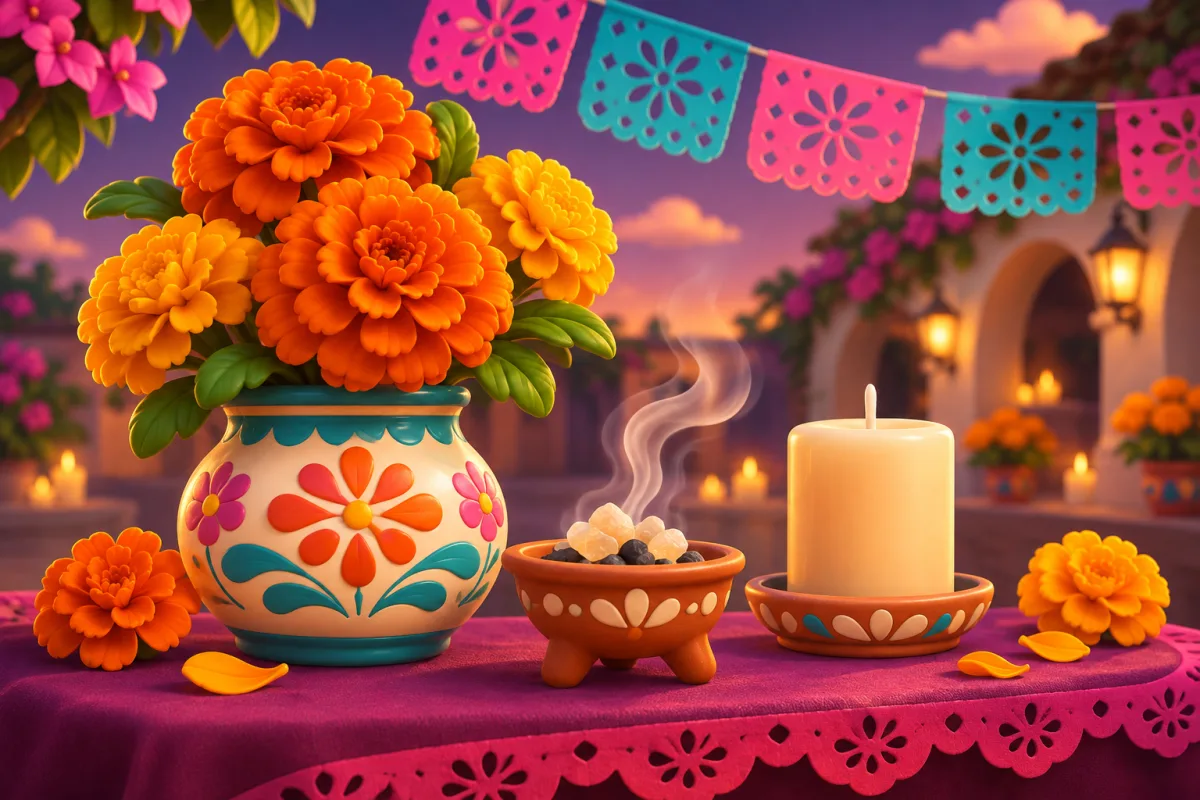
An ofrenda is the family altar. Home altars traditionally hold marigolds called cempasúchil, copal incense, pan de muerto, candles and sugar skulls, and often photographs and belongings of the person remembered. What each item means to a particular family is theirs to explain, if they choose to.
When someone has lost a loved one recently
The coaches draw a line between the holiday and grief. When a death is recent, they say, mourning comes first, and the day set aside for remembering is not the same thing.
For a friend who lost someone this year, they suggest skipping feliz. Lo siento mucho is a way to say sorry, and te acompaño en tus sentimientos is an expression of sympathy. Keep it brief and let the other person set the pace.
At a cemetery or a family altar
Families visit gravesites and build ofrendas with photographs, candles, sweets and favorite foods. Those are family spaces, and visitors are guests in them.
Greet people as you would anywhere, then listen more than you talk. If you are invited to see an altar, ask about the person it honors and let the family decide how much to share.
Some will enjoy the conversation. Others will prefer privacy, and a polite no is part of being a good guest.
Which name should you use?
Neither form is a mistake. Mexican usage traditionally favors Día de Muertos; in the United States and English-language writing, Día de los Muertos is also common.
For written Spanish, capitalize the festival's nouns and adjectives: Día and Muertos begin with capitals, while de stays lowercase. Keep the accent in Día. The language guidance explicitly includes the name with an optional los, so that extra word does not change the capitalization rule.
For speaking practice, put the stress at the end of feliz; in Mexico its z has an s sound. Día has two syllables, with the first stressed. Say the connecting word de briefly and softly.
Public observances in the United States
Mexican American observances include intimate family remembrance as well as public gatherings. For some families, religious practice remains important; visits to relatives' graves and observances at home continue alongside civic programs.
Chicano artists and activists helped develop the public celebrations. Their events connected Mexican heritage with cultural identity and political awareness. Artists also brought ofrendas and other installations into galleries and museums, reaching audiences beyond individual households.
That history helps explain why a public arts program and a family's cemetery visit may look different. A museum altar can address a wider community, while a family altar holds personal memories.
It is not Halloween
Día de Muertos is not Halloween. It is a time to honor and welcome the dead.
Traditional remembrance in Mexico does not require costumes or skull makeup. Parades likewise belong to newer public celebrations rather than defining the older family observance.
Before you go
Greet people the way you normally would, and listen. If you want to mention the day, a question about an ofrenda is a warm place to start.
If someone is grieving, choose a plain word of sympathy over feliz. At a cemetery or a home altar you are a guest: ask before taking photographs and follow the family's lead. A family or community may decline a visit; accept their decision.
Quick check
1. Which name do the coaches identify as usual in Mexico?
2. What do the coaches suggest for someone recently bereaved?
3. Which option asks about someone's plans for an altar?
Questions readers ask
Is it okay to say Feliz Día de Muertos?
What do I say to someone who recently lost a loved one?
Which version of the holiday's name is correct?
Sources