
Deciding how to reach a Día de Muertos celebration is part of planning the trip. If you would rather not drive, the journey deserves a few minutes of attention before the program does.
The easiest way to plan it is to keep three questions apart: what the organizer suggests for arriving, what the transit agency itself has confirmed, and how you will get home. Each answer comes from a different place and covers only part of the trip.
Start with the organizer's venue information
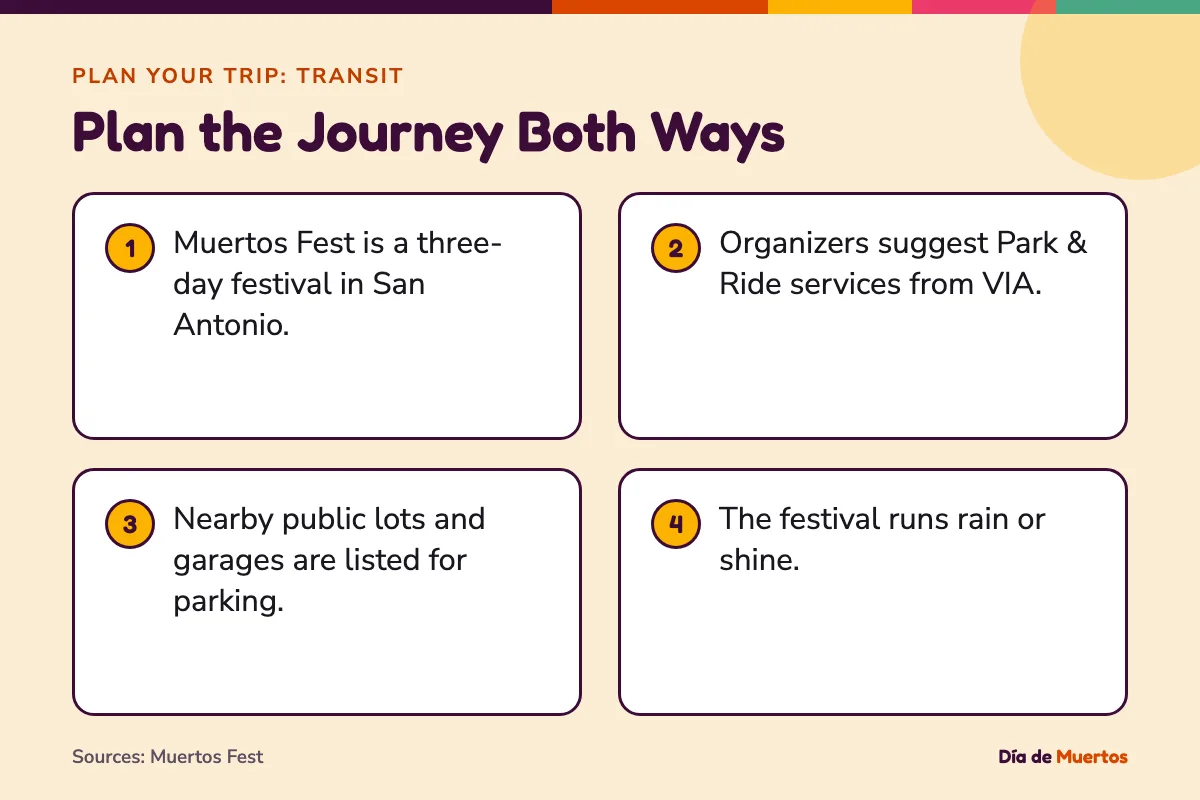
Muertos Fest in San Antonio is a three-day festival that gathers the city to honor loved ones through art, music and tradition. It is held in Hemisfair, an open-air park, and the organizers publish an FAQ page with arrival advice.
That page says nearby public garages and lots will have parking. For travelers considering alternatives to driving, the organizers suggest Park & Ride through VIA Metropolitan Transit, or a ride-share trip.

What a recommendation does and does not settle
The Park & Ride suggestion is advice, not a confirmed service plan. It identifies an option to investigate. It does not tell you which buses run, how often, or where they stop.
Check those details with the transit agency for your travel day. If it publishes an event notice, check the dates, stops and directions covered before using it to plan your trip. If you cannot find an event notice, check the agency's current schedules and alerts, and contact the agency if your journey remains unclear.
If you are driving or parking
If your plan includes driving to a parking lot, keep the festival's road approach advice handy. For drivers, the organizers advise against the Cesar Chavez/281 exit and suggest approaching Hemisfair from the south or west.
That is driving advice. It does not tell you where a bus will drop you or which side of the park a given stop is on, so keep it separate from your transit plan.
Questions to settle about the transit leg
Before the day, it helps to be able to answer a few plain questions. Where does your route start, and where does it let you off? How far is the walk from that stop to the entrance, and can everyone in your group manage it? Does the agency list street closures or temporary stops for your travel day? If so, use the boarding location in that notice rather than relying on a stop you previously saved.
If you plan to use a Park & Ride, identify the lot and how you will reach it. For a ride-share trip, check where drop-offs are permitted rather than using the organizers' driving approach as a drop-off instruction.
Save the relevant stop or drop-off location on your map, then check the walking portion separately.
Plan the ride home as its own trip
Plan the return journey separately, including its boarding point and any connections, instead of simply reversing the directions you saved for arrival.
Here are the questions worth answering before you leave the house. When does the last service on your route run? Is your return stop in the same place as your arrival stop? What will you do if the route you counted on is not available? Before relying on late-night service or a special shuttle, find an explicit announcement covering your event and travel day. If your backup involves parking, check its arrangements separately rather than counting on an open space.
Weather, space and sensory hours
The organizers say the celebration goes ahead rain or shine, so it is worth thinking about the walk from your stop in the weather you may get. For a rest after the journey, the FAQ describes ample sitting space at Hemisfair and permits visitors to bring blankets.
The organizers also describe Sensory-Friendly Hours when sound levels are lower and crowds are smaller. If you are traveling with someone who finds large crowds difficult, those hours may shape which part of the day you travel. The organizers also describe the park as designed for all ages and abilities. That is their statement about the venue, so match it against the route you actually plan to take.
Before you go
Día de Muertos is a living remembrance of the dead, and a public festival is one visible part of something deeply personal for many families. Arrive with time to spare, give performers and processions plenty of room, and be patient if the way in is slower than you hoped.
Read the organizer's venue or FAQ page for arrival advice. Then find the transit agency's own service information and alerts for your travel day. Finally, write down your return plan and a backup before you set out.
Questions readers ask
What transport does Muertos Fest recommend?
Which way should drivers approach Hemisfair?
Does Muertos Fest offer quieter hours?
Sources