
Oaxaca's Día de Muertos brings brass bands into the streets and public altars into the city center. In cemeteries, the purpose is more personal: relatives gather around the graves of people they love. A trip can include public celebrations without making a family vigil part of the itinerary.
For a first visit, start with the city's exhibitions, comparsas and cultural activities. If a cemetery visit is also part of your plans, leave room for community decisions about access and privacy rather than trying to fit several villages into an evening.
What Oaxaca announced for 2026
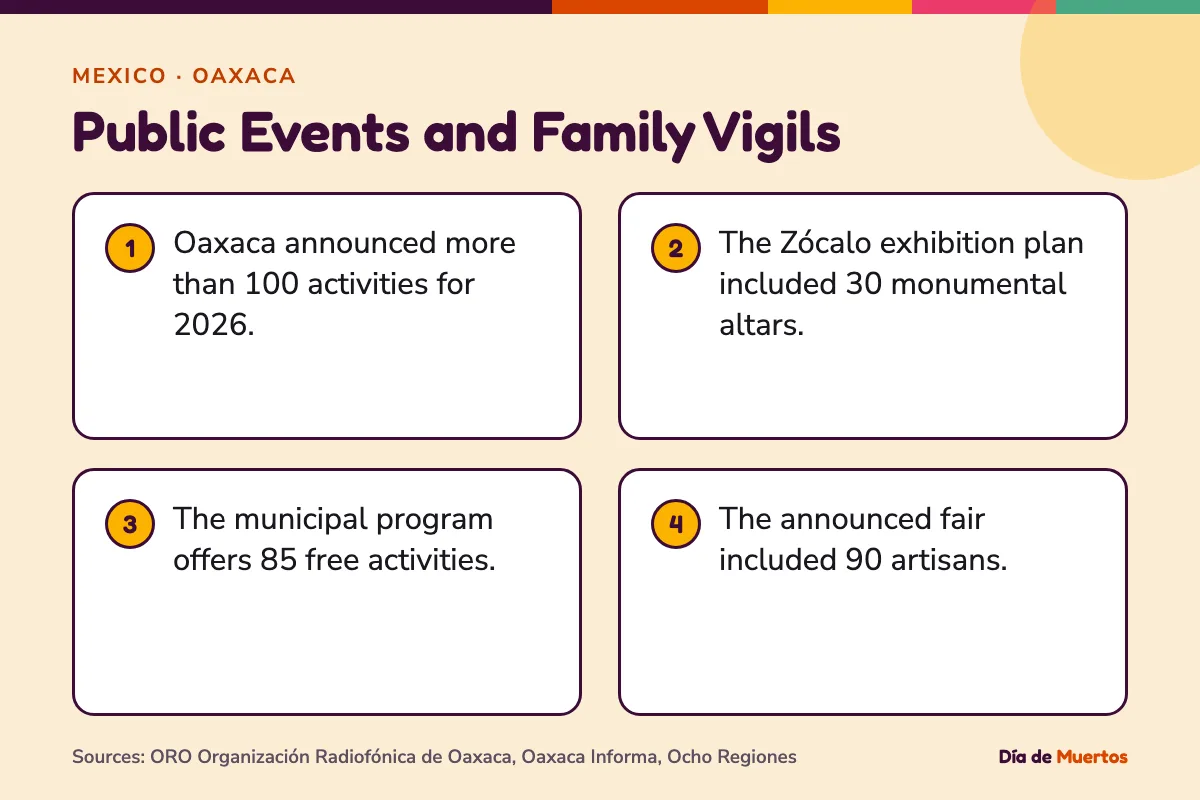
The state tourism office presented a program of more than 100 activities across Oaxaca City and other municipalities. Its plans included 30 monumental altars in the Zócalo, representing Oaxaca's 16 Indigenous peoples and the Afro-Mexican community. These were announced as public exhibition altars, distinct from offerings placed beside a family's grave.
The state also announced the Verbena Xandú, with complimentary tamales, bread, chocolate and coffee for residents and visitors. Other plans included children's workshops through the state family agency's Diverti Muertos program, a monumental altar and a calenda linking El Llano with the Alameda de León.
Beyond the city center, the proposed “Flores que guían el alma” circuit is planned to connect Parque Juárez, also called El Llano, with Central Valleys marigold fields. The named destinations included San Antonio Arrazola, San Martín Tilcajete, Teotitlán del Valle and Mitla. The announced “Ofrenda y Herencia” fair is set to bring together 90 artisans and 10 local producers.
The municipal program separately offers 85 free activities. Workshops, music, dance and altar competitions are among its public options. A visitor need not enter a cemetery to take part in the season's cultural life.

Comparsas: the public street celebration
Oaxaca has both a municipal Mega Comparsa and a state Gran Comparsa. They are separate events, so their names are not interchangeable when arranging an evening out.
Bands and moving crowds give comparsas their lively street atmosphere. Catrina dress and flower crowns belong to this public celebration; a graveside vigil calls for a quieter approach. The state also announced competitions for contingents and Catrinas, alongside concerts in Oaxaca City and Santa Cruz Huatulco.
Night by night in 2026
The state's main program runs through Nov. 3, with activities continuing until Nov. 8. These four nights can help shape a visit.
Friday, Oct. 30: the Verbena Xandú is scheduled to open at 7 p.m., with free tamales, bread, chocolate and coffee.
Saturday, Oct. 31: the state's Gran Comparsa is scheduled to start at 6 p.m., moving from the calzada Porfirio Díaz to Manuel García Vigil. Routes can change, so check the current program before setting out. The same night is the most intense vigil at the cemetery of Santa Cruz Xoxocotlán, south of the city.
Sunday, Nov. 1: in Santa María Atzompa the vigil deepens after midnight and runs toward dawn, so the small hours of Nov. 1 are its peak.
Monday, Nov. 2: the last day of the season's family visits, which run from Oct. 31 to Nov. 2.
Public altars and sand carpets
A monumental carpet in Jalatlaco was among the state's announced installations. Tapetes de arena combine materials such as colored sand, sawdust, seeds and flower petals in designs arranged on the ground. Their temporary nature is part of their funerary meaning, not a promise that an installation will remain available throughout a trip.
Public altar exhibitions and competitions offer a way to spend time with elaborate offerings intended for display. At a grave, however, flowers, photographs and other objects belong to a particular family's remembrance. An invitation to view a public installation does not extend to every altar elsewhere in the city.
Choosing a cemetery visit
Panteón General is a walkable option in the Centro and is accustomed to visitors. Santa Cruz Xoxocotlán lies south of the city, while Santa María Atzompa is to the northwest. Each community has its own practices; proximity on a map does not make their vigils interchangeable stops.
Families may be cleaning and decorating graves, praying, talking or sharing food. Their gathering remains personal even when other visitors are present. If relatives need more space or request privacy, a visit may need to end.
For 2026 the city announced extended cemetery hours for the busiest days: the San Miguel cemetery will be open from 7 a.m. to 11 p.m., and the Marquesado and Xochimilco cemeteries from 7 a.m. to 6 p.m. The municipality also prohibited alcohol, glass containers and fireworks. It also restricted entry for people carrying weapons or arriving intoxicated or under the influence of drugs. State health services asked families to use damp sand instead of water in flower vases to reduce mosquito breeding.
What a guided outing can offer
A useful guide can explain differences between communities, find out whether entry is permitted and recognize when crowding makes a visit unsuitable. A manageable group is less disruptive than several vehicles arriving together without coordination.
Before paying, establish which places the outing includes, its duration and any photography restrictions. Ask how the operator communicates with the communities involved. Cemetery gatherings are family remembrances of the dead; guides may adjust the route when communities restrict access.
Accessibility deserves a separate conversation. Cemetery paths may have steps, loose gravel, mud, cables or open flames. Ask about the amount of walking, places to sit, restroom access and options for an early departure. Visitors affected by smoke, incense, loud music or dense crowds should describe those needs before booking rather than waiting until arrival.
Choosing a base in the city
The Centro is convenient for walking to public events, but its late-night noise can make sleep difficult. Check what is directly below a room before reserving, especially if the building also houses a bar.
Xochimilco offers a different balance: it is a greener, uphill neighborhood within walking reach of the Centro, with quieter nights. Distinguish the neighborhood from the cemetery bearing the same name when discussing directions or a pickup.
El Llano, the Alameda, the Zócalo and Plaza de la Danza are close enough to connect on foot. For village outings, transport needs more deliberate planning than a walk between central plazas.
Arrange the return before leaving
Book the journey home as part of the outing, not as a task for the cemetery gate afterward. Closures and heavy demand can reduce the supply of rides. Set a pickup location and time with your driver or operator in advance.
Crowds can also overwhelm phone service, leaving ride-hailing apps or messages unavailable. Keep the phone charged and agree where your group will reunite if separated. Carry small-denomination cash for transport and purchases. Comfortable closed shoes help on rough paths; a sweater or light jacket is useful when a warm afternoon gives way to a cold valley night.
Before you go
Families gather in cemeteries to remember their dead; visitors are guests. Offer a greeting and obtain permission before photographing a person, grave or personal offering. A child's photograph requires a responsible adult's consent. Without a clear yes, put the camera away. Avoid flash, stay off graves and leave room for relatives to pass. When privacy is requested, withdraw without argument. Keeping part of the visit camera-free makes it easier to notice when to step aside and let a family have its own time.
Questions readers ask
What did the state announce for Verbena Xandú?
Are the municipal Day of the Dead activities free?
Where is Panteón General?
Sources
- ORO Organización Radiofónica de Oaxaca: Presenta Oaxaca más de 100 actividades en el marco de las fiestas del Día de Muertos 2026
- Oaxaca Informa: Oaxaca alista altares y comparsas 2026
- Qué Onda Oaxaca: Día de Muertos en Oaxaca 2026: programa completo de actividades, comparsas y panteones
- Ocho Regiones: Oaxaca de Juárez: horarios de panteones para Día de Muertos
- Backpacking Diplomacy: Day of the Dead in Oaxaca: Where to Go Each Night, and How to Do It Right
- Oaxacando: Oaxaca Cemetery Visits on Day of the Dead: Etiquette