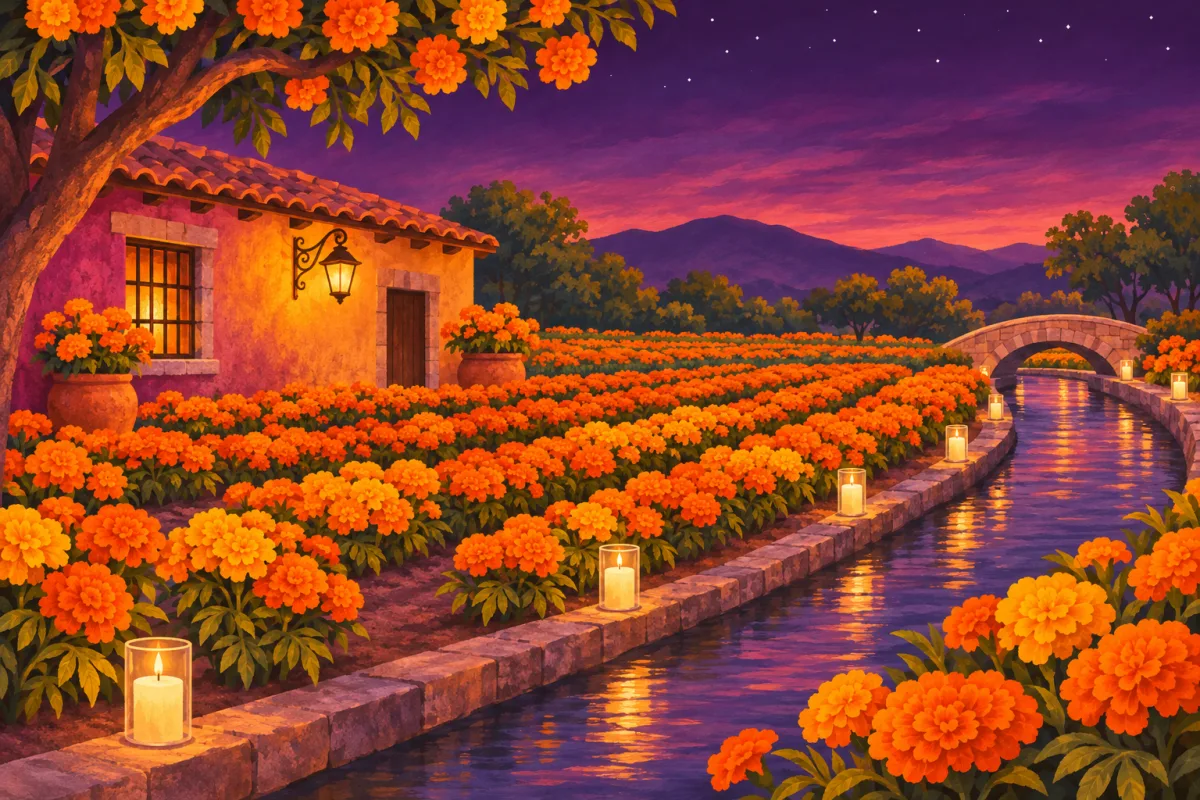
Cempasúchil flowers belong to offerings made in remembrance of the dead. Their place is not limited to a vase or a table: community accounts describe them on altar arches, in a flower crown and around graves where families gather.
The accounts below describe several different ways communities arrange offerings. They connect the flower with remembrance without establishing a single arrangement that everyone must follow.
A flower for the altar
Accounts from Indigenous communities describe flowers as part of a larger welcome for the dead, alongside food, candles and other offerings. Cempasúchil appears in several of these accounts, though not every mention of flowers names a particular kind.
A Ch’ol account from Campeche describes flowers, xate leaves and candlelight around the offering; it does not say those flowers are cempasúchil. The Mixtec account from Oaxaca is more specific: cempasúchil belongs on the altar with religious images and portraits of deceased relatives. There, the altar is the link between the living and the dead. The same account describes a white tablecloth or papel picado covering the table. Some altars have stepped levels, depending on a family's means; the account says these can represent heaven, earth and the beyond. These details belong to that account rather than a universal design.
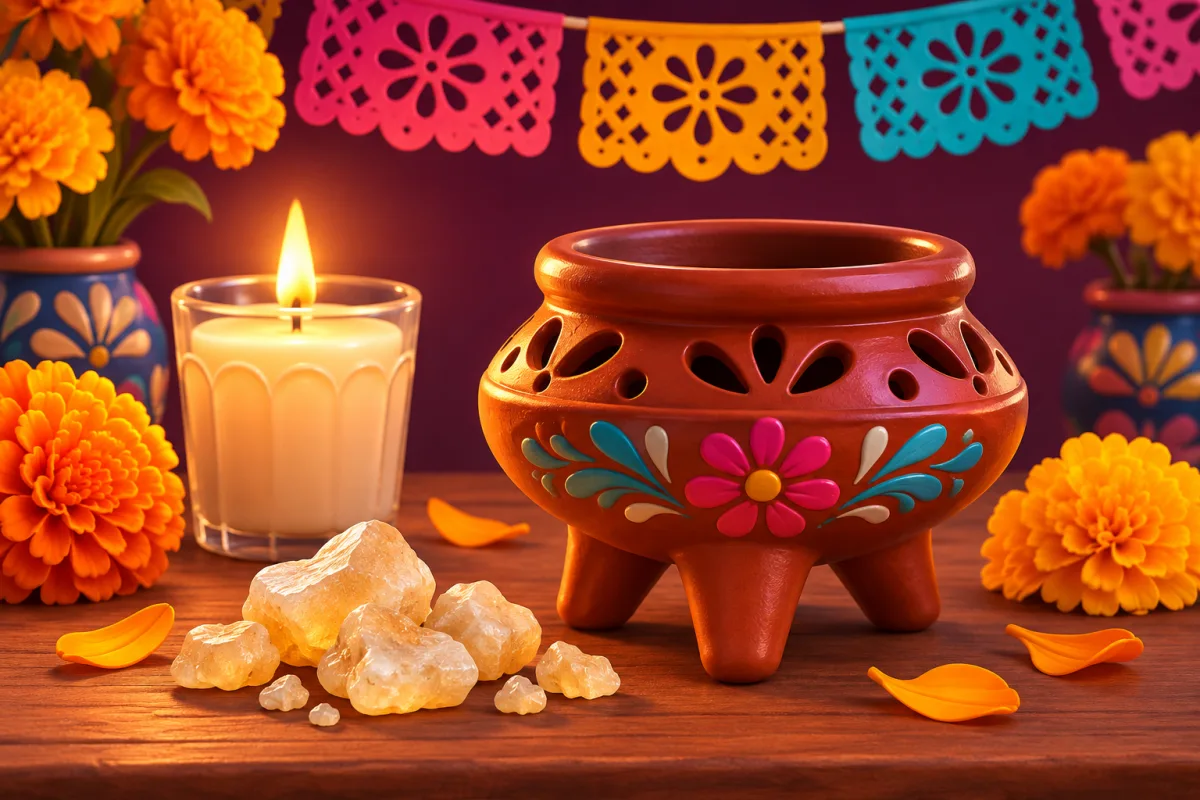
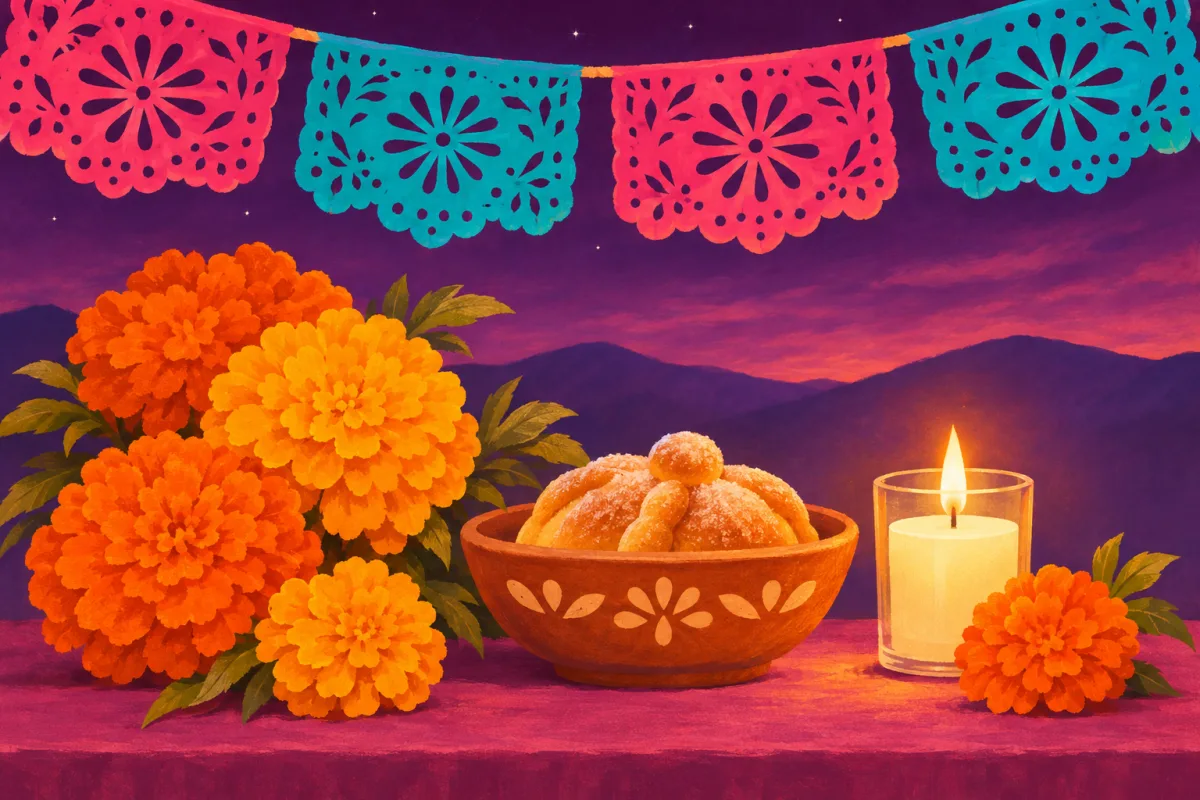
Home offerings also bring together cempasúchil, copal incense, pan de muerto, candles and sugar skulls. Photographs and belongings of the person being remembered may accompany them.
"Que florezca el cempasúchil; que florezca la memoria; que florezca la vida" (Clara Brugada Molina, Mexico City head of government)
Arches, crowns and graves
An altar arch and a flower crown are different arrangements, and both appear in these community accounts.
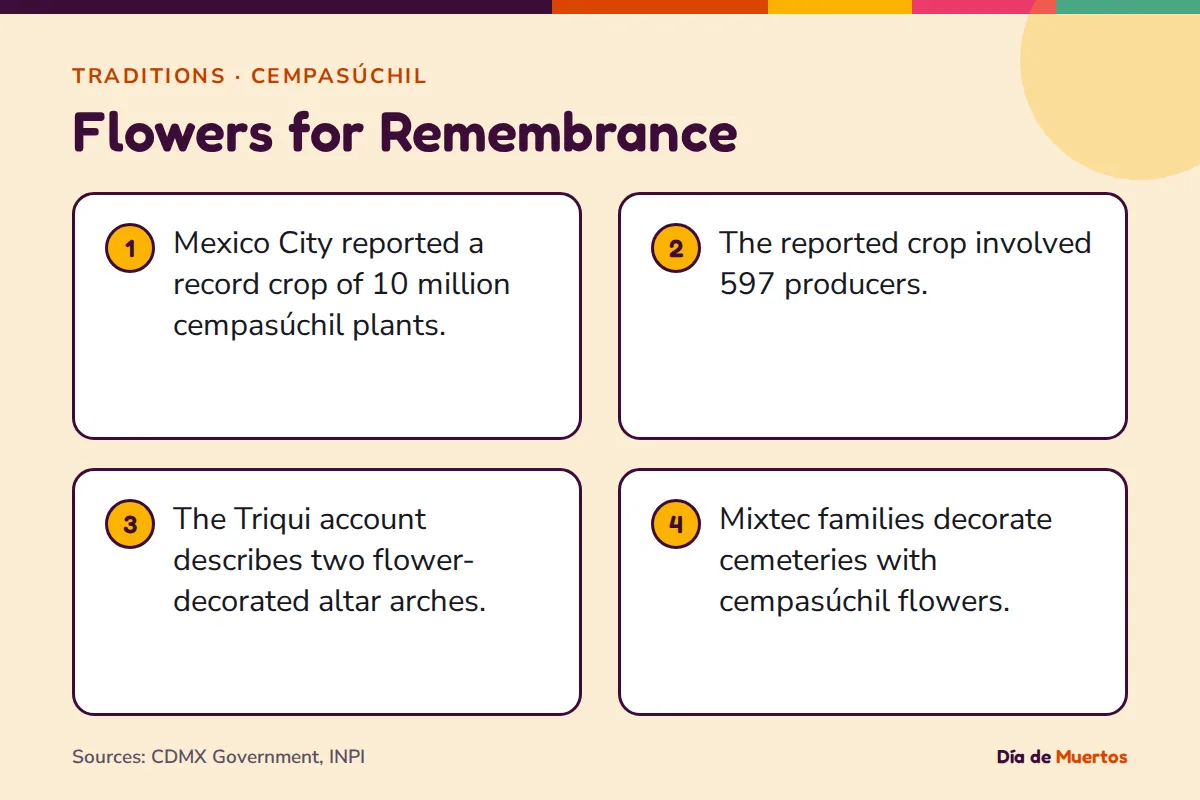
The Triqui account describes two altar arches decorated with either cempasúchil or cresta de gallo, then blessed with water and copal. In Santa Cruz Nundaco, Oaxaca, a cempasúchil crown takes the place of the arch made elsewhere. In Santiago Yaitepec, cempaxúchitl appears on offerings alongside mano de tigre and copal.
The Triqui account also emphasizes hospitality over expense: even a modest offering can welcome the dead. It gives green beans, totopos and plain water as an example. The flowers sit within that act of welcome, rather than making the offering a display of wealth.
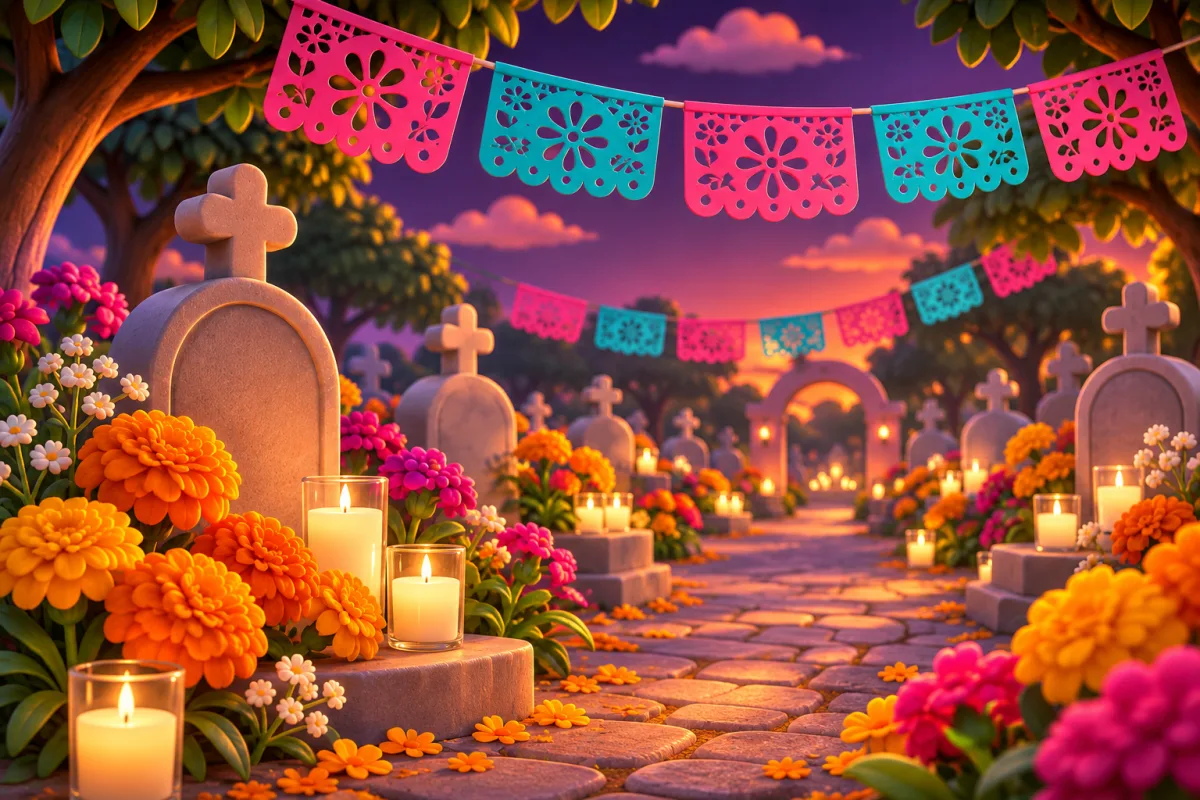
Cempasúchil also appears outside the home. Mixtec families decorate cemeteries with it, and candlelight falls on relatives eating and talking beside the graves. In Santo Domingo Albarradas, flowers decorate the chapel and cemetery too, but that account calls them regional flowers without naming cempasúchil.
A literary account by Liliana Flores Estrada uses a child's voice, written as if from the other side. It says the color of the cempasúchil dazzles him as he arrives, and that the flower is known for catching the eye. It is a literary text, not a rule.
Who grows the flowers
The flower is also a crop. In Mexico, farmers plant flowers months ahead of the festivities, while artisans prepare decorations and other seasonal items.
One Mexico City sales launch shows that work. From San Gregorio Atlapulco, head of government Clara Brugada Molina opened the season’s cempasúchil sales and reported a record crop of 10 million plants, up from 6.5 million the year before. The plants were grown in Xochimilco’s chinampa zone. She recognized 597 producers and described flower sales as income for rural communities that also supports chinampas and conservation land.
The city government put more than 8 million pesos into direct support, including technical assistance, pots, compost and seeds. The environment secretary reported pots priced between 15 and 30 pesos in Xochimilco markets. These figures belong to the season of that announcement, and they show one production area, not the origin of every festival’s flowers.
Brugada also encouraged families to keep making offerings at home and in their streets and communities: "Que florezca el cempasúchil; que florezca la memoria; que florezca la vida".
Before you go
Start with a public display or an organizer’s published program, and check the city or organizer’s information before booking. A past sales announcement is not a current schedule or price list. Use the named community examples as context, not as instructions to expect the same arrangement everywhere. A crown in Santa Cruz Nundaco and arches in the Triqui account are distinct forms of welcome. At a family or community offering, visitors are guests: ask before entering or photographing, and accept that access or photographs may be declined.
Questions readers ask
What accompanies cempasúchil on home altars?
Is an arch the only documented flower arrangement?
Where was the reported Mexico City crop grown?
Sources
- Instituto Nacional de los Pueblos Indígenas (INPI): Antología: Día de Muertos en los pueblos indígenas de México
- MexCulture (Mano a Mano): Sobre el Día de Muertos | MexCulture
- Jefatura de Gobierno de la Ciudad de México: Clara Brugada anuncia ofrenda catrina monumental, desfile de muertos y paseo luminoso en Reforma; la producción de cempasúchil rompe récord