Beside the marigolds and candles on an ofrenda, you may notice a thin line of fragrant smoke. Some altar descriptions include copal incense, and the people who describe it do not all say the same thing about it.
In Santiago Yaitepec, copal accompanies the family's reception of the dead. In the Triqui practice described below, it accompanies the blessing of altar arches. These are distinct uses, rooted in the communities where they take place.
Copal as a named altar element
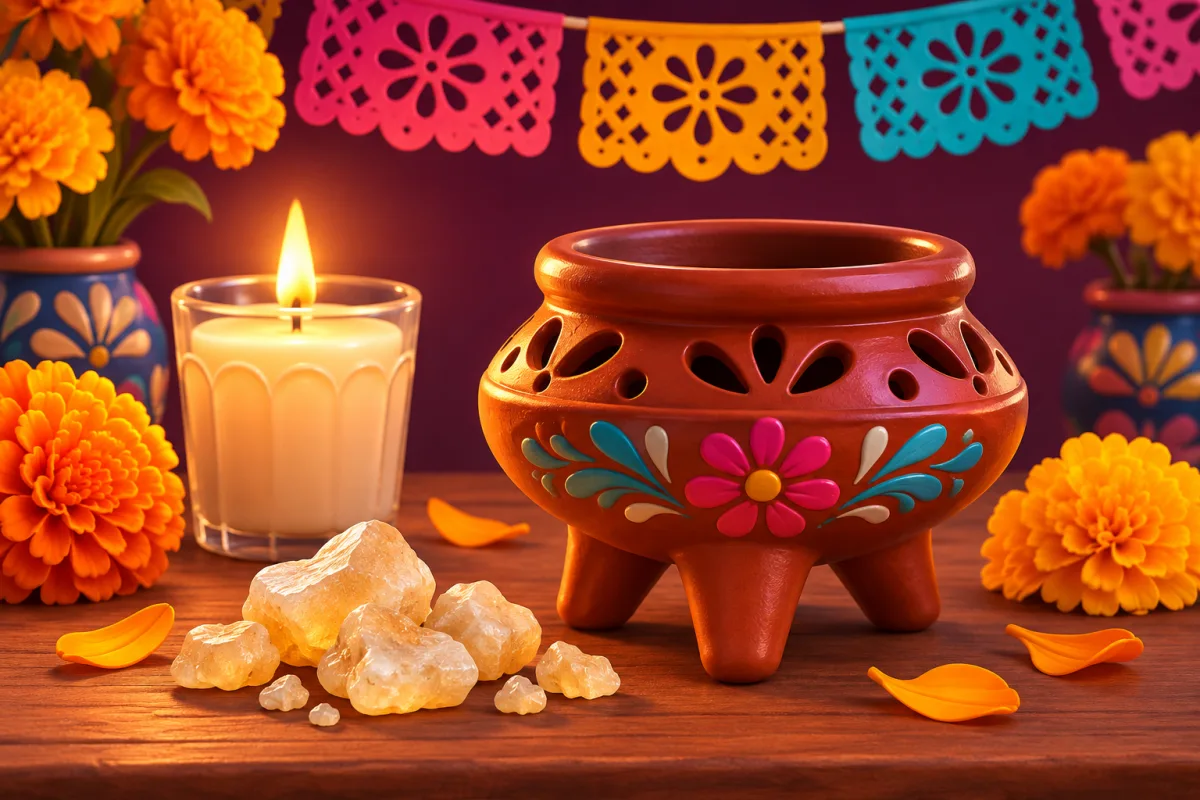
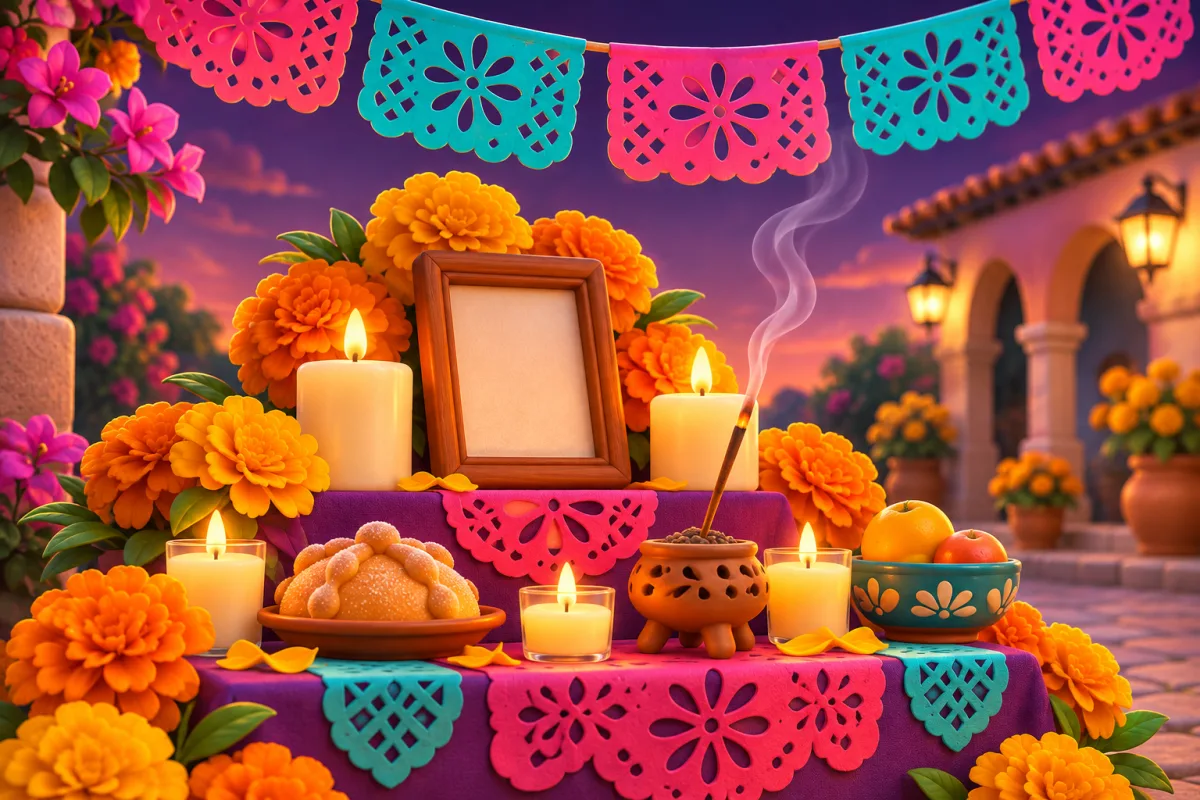
Traditional home-altar elements include cempasúchil marigolds, copal incense, pan de muerto, candles and sugar skulls. Photographs and belongings of the person being remembered may also be included.
The Spanish phrase incienso de copal means copal incense. That specific name matters: a reference to incense alone does not establish that it is copal.
Copal is one part of an arrangement that may also bring together candlelight, flowers, bread and the image of a loved one.
Santiago Yaitepec, on Oaxaca's coast
Santiago Yaitepec is a municipality on the coast of Oaxaca, home to Mixtec, Amuzgo and Chatino groups. There, marigolds, mano de tigre and copal commonly adorn the ofrendas and altars.
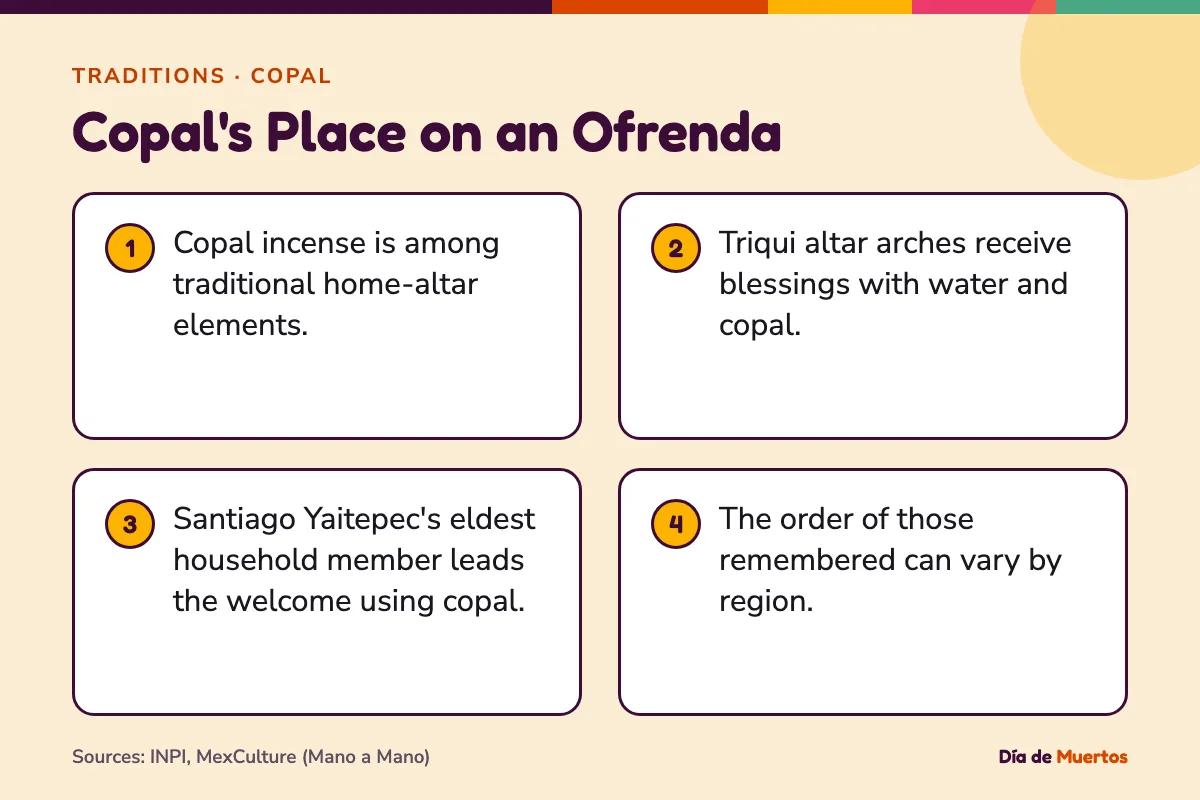
The oldest person in the house directs the reception of the dead, using candles and copal.
Families believe that staying together during the visit allows the dead to arrive. After midday, people remain together at home; local oral histories tell of encountering the dead outside and frightening them away. Copal belongs here to a welcome centered on the family.
The Triqui altar arches
In the Triqui practice, a pair of flower-covered arches adorns the altar. Cempasúchil or cresta de gallo supplies the floral decoration.
Water and copal accompany the purification and blessing of those arches. This is a ritual use associated with the altar's structure, rather than a claim about a physical benefit from incense.
For the Triqui, providing something for the returning dead matters more than the cost or abundance of the offering. Even a modest altar can offer green beans, totopos and a jug of plain water. The emphasis is on having something to share with the visitors.
A smell that says home
Liliana Flores Estrada's literary piece Un mundo con vivos speaks in the voice of a child who has died and returns each year. The scent of copal incense tells him he is nearly home. He also describes announcing his arrival through salt, water, pulque, candles and incense.
This is a literary narrator, not a description of a named community's ritual. His parents prepare his favorite chiles rellenos, and he understands the food and altar as expressions of their continuing love. Copal's scent belongs to that imagined homecoming.
Where you might meet it
Visitors may encounter public ofrendas through cultural institutions and community programs. Mano a Mano, for instance, works with cultural organizations and institutions to create ofrendas and hold workshops in October and early November.
Mano a Mano's celebration began in Manhattan's Madison Square Park in 2004. The small cemetery at St. Mark's Church in-the-Bowery became its celebration venue in 2005.
Home altars are different. They belong to families, and a visitor is a guest there.
The sequence in which different groups of the dead are remembered can also vary by region or tradition.
Before you go
If you see incense at a public ofrenda, take it as part of an altar that someone made with care. If the people tending it are willing to talk, ask what it means to them; their answer is the one that counts.
Ask before you photograph anyone, and keep clear of the smoke, candles and offerings. Visit a family's home altar only by invitation, accept a refusal, and follow the family's lead if welcomed. Before booking, check the organizer’s event page for the location, dates and visitor details.
Quick check
1. In the Triqui account, what is paired with water to bless the altar arches?
2. In Santiago Yaitepec, who leads the welcome using candles and copal?
3. In the child's-voice piece, what does the scent of copal incense announce?
Questions readers ask
Is copal the same as any incense on an ofrenda?
What is copal used for in Santiago Yaitepec?
Where did Mano a Mano hold its first Día de Muertos celebration?
Sources