If you are choosing where to spend Day of the Dead in Ensenada, start with one distinction. Some events are organized for the public, with an announced venue, activities and admission fee. The remembrance at a cemetery is something families do for their own dead.
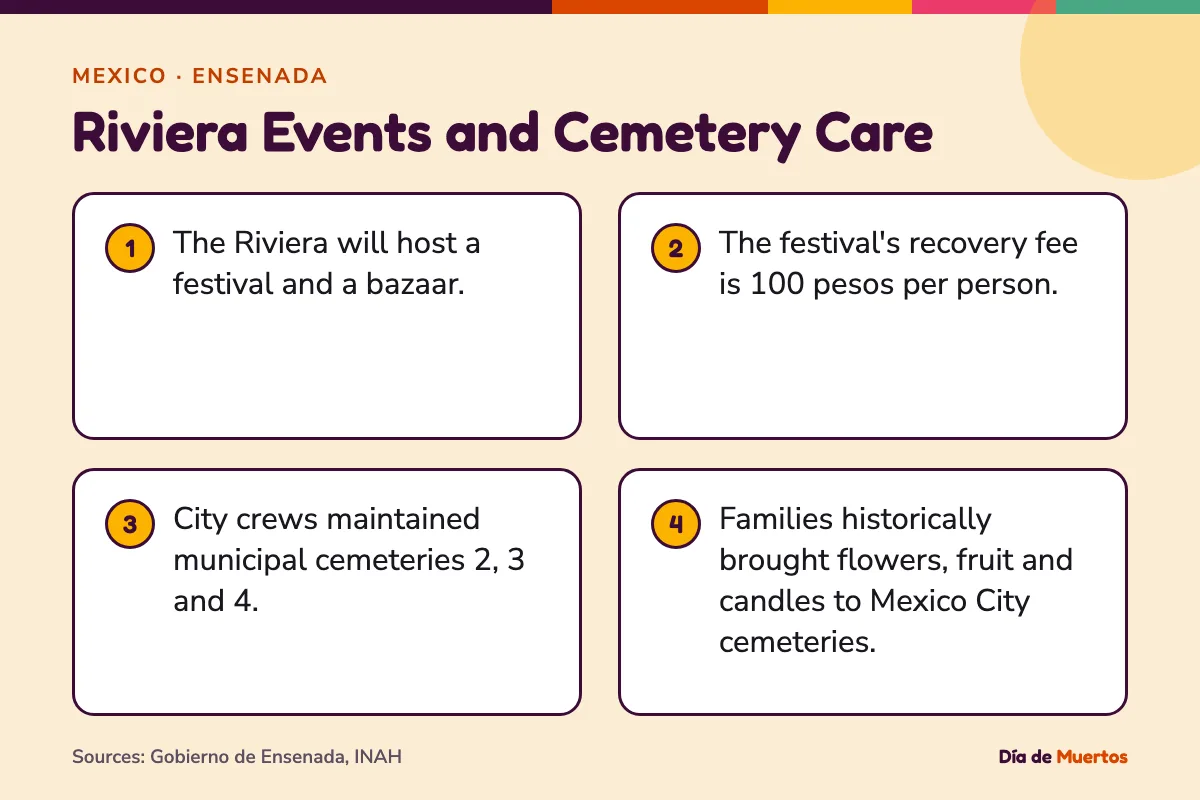
The Centro Social, Cívico y Cultural Riviera de Ensenada belongs to the first group. Ensenada's government has announced two celebrations at the Riviera for the coming weekend: a festival and a bazaar.
The Riviera as a public venue
The Riviera is a cultural and civic center run by a municipal entity. Its director, Rosela Medina Lencioni, described it as a place that opens its spaces to citizen participation, local talent and the spread of traditions, and as a way of widening the cultural options for residents and visitors alike.
For Day of the Dead, the center was named as the host of two separate celebrations: a festival and a bazaar. They are different events with different settings, so it helps to keep them apart when you plan.
What the festival is scheduled to include
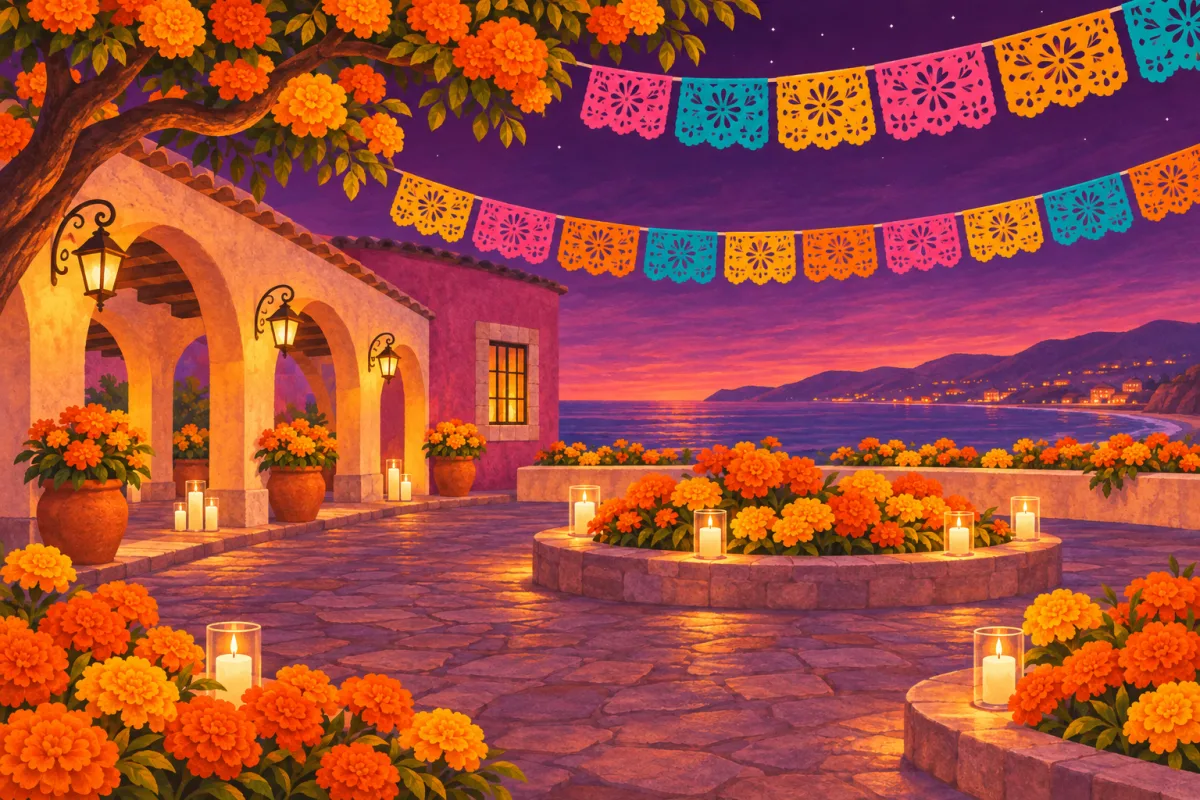
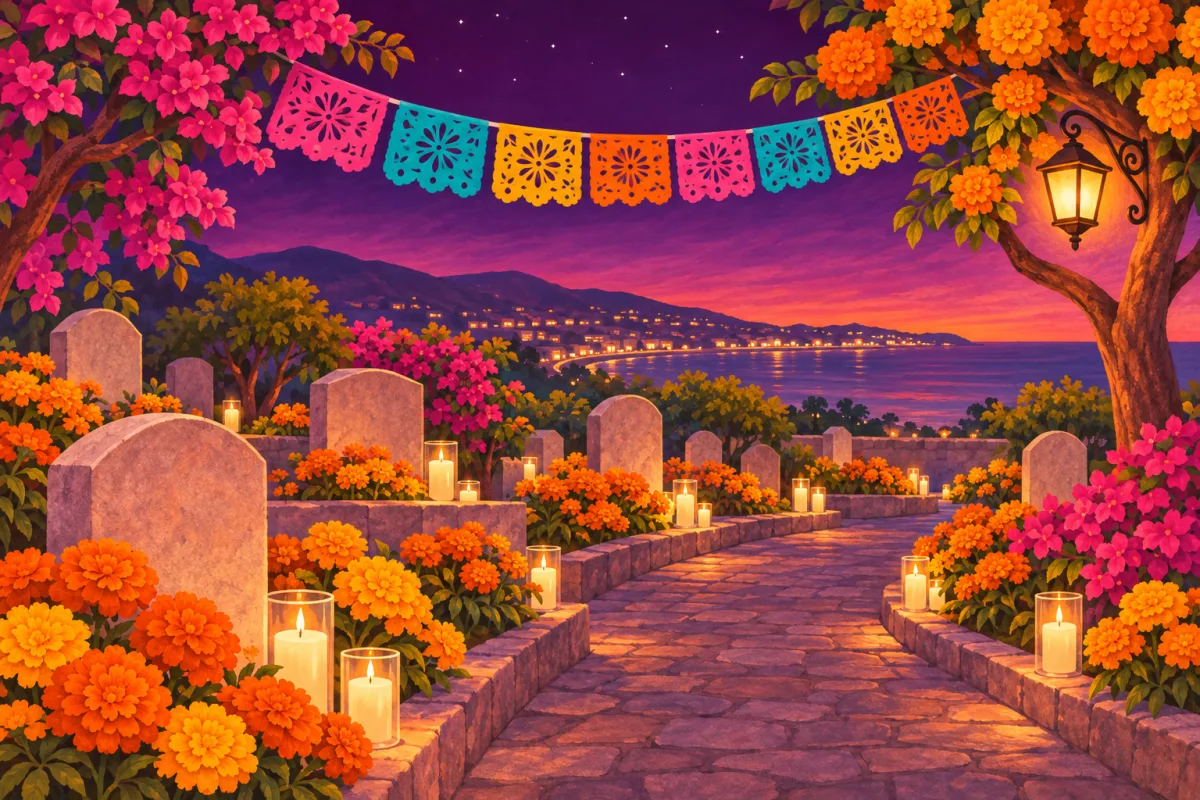
The government announced the festival as the second edition of the Festival de Día de Muertos. It is set for the front gardens of the Riviera. The planned centerpiece is a group of three community altars: a general altar, one remembering children and another remembering pets. Families are invited to contribute offerings and keepsakes. This opportunity to participate belongs to the advertised public festival; it does not imply access to a family's remembrance elsewhere.
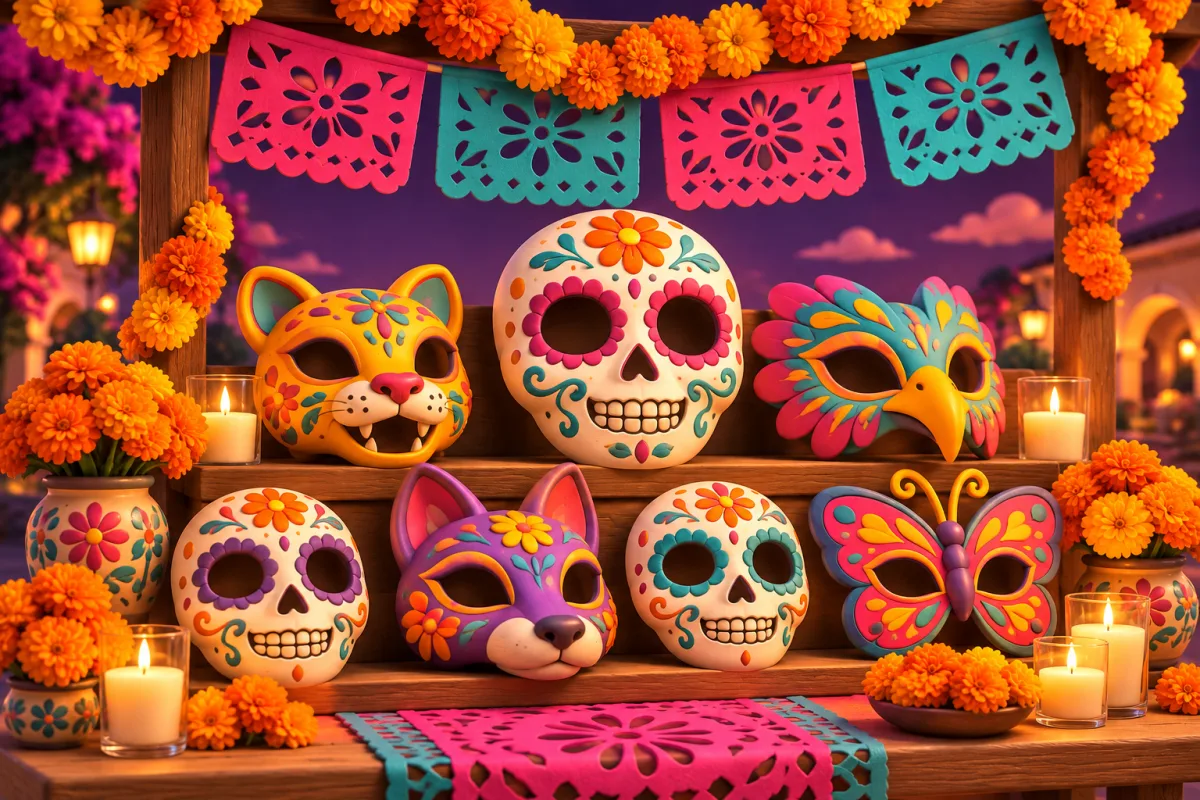
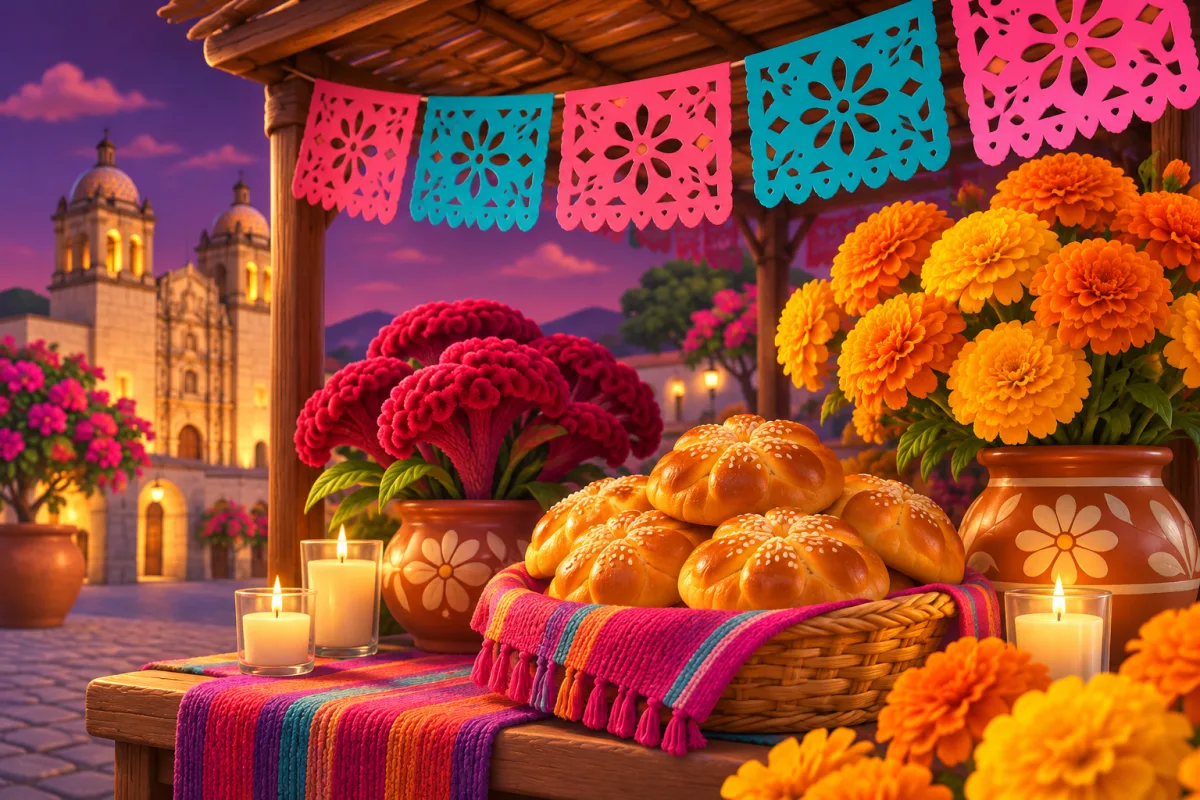
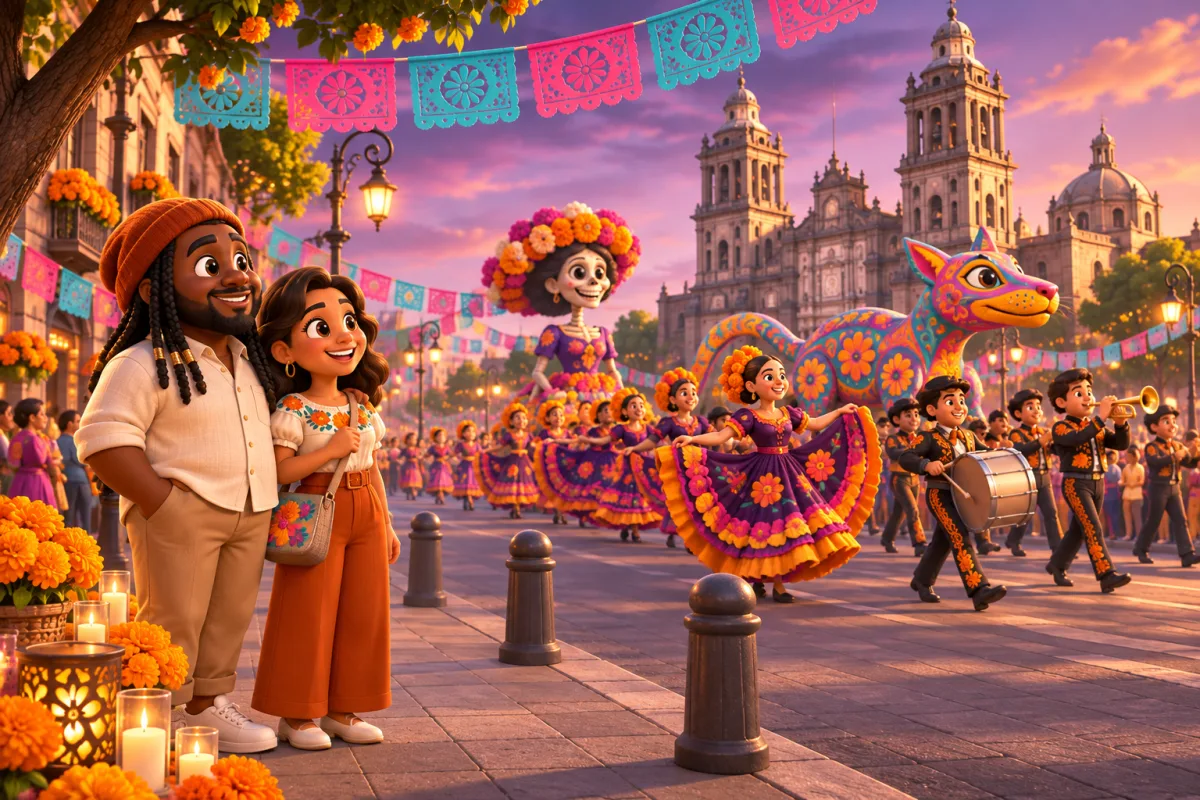
The program is built around traditional elements: cempasúchil marigolds, cartonería skulls, alebrijes and papel picado. Around them come art activities, music and a food sampling.
The festival charges a recovery fee of 100 pesos per person.
The bazaar and the Bar Andaluz altar
The second event is the Bazar de Día de Muertos, set for the Patio Bugambilias. Local entrepreneurs are scheduled to offer a range of products and articles. The day also lists workshops and a children's catrina contest, which the government frames as activities for families.
As part of the same celebration, the government announced the inauguration of a Day of the Dead altar on the terrace of the Bar Andaluz. It describes the altar as a space for honoring the memory of those who have departed and for keeping the tradition alive.
For bazaar information, the announcement gives the telephone number 664 314 1480. The festival and bazaar have different locations within the Riviera, so check which event a set of details describes.
The cemeteries are a separate matter
Ensenada's cemetery news is about upkeep. Ahead of the commemoration, the city government, under Mayor Claudia Agatón Muñiz, stepped up cleaning, maintenance and improvement work at municipal cemeteries 2, 3 and 4. The director of municipal public services, Carolina Rivas García, said the aim was to leave the grounds in better condition for the families who come to remember their loved ones.
The work was ordinary and practical: sweeping, trash removal, weeding, and pruning of trees and palms. Crews also graded access roads and walking areas inside the grounds. In cemeteries 2 and 3 they repaired 27 concrete bases for water taps, inspected 98 taps and replaced 52 faucets. Entrances and exits also received markings and signs.
None of this is a visitor program or an invitation to watch families. The announcement is addressed to the people who go to remember their dead, and it asks the public to come with respect and to keep the grounds clean by using the trash points provided.
A little context on the remembrance
An archaeologist's historical account traces the early-November festivities to sixteenth-century Mexico, while distinguishing them from earlier Mesoamerican funerary practices. The account also describes later cemetery visits in Mexico City, offering a specific historical example of families bringing food and offerings to remember the dead.
He also describes a nineteenth-century scene in Mexico City, where families made their way to the cemeteries carrying an offering of flowers, fruit and wax candles, along with food to eat there. That historical example concerns Mexico City; it does not establish how cemetery observance developed in Ensenada.
That is also why the two kinds of places differ. A festival garden with altars, music and a market is cultural programming designed for an audience. A cemetery is where a family's own remembrance happens.
Before you go
Before making arrangements for the coming weekend, check the festival's Facebook page, Día de Muertos Oficial, or its Instagram account, @diademuertos.oficial, for program details. If you are planning a trip for a later year, wait for a fresh announcement from the Ensenada government or the Riviera, since the fee, the activities and the venue spaces come from each year's announcement.
At a municipal cemetery you are a guest among families. Keep your voice low, stay on the paths, leave graves and offerings untouched, and ask before photographing anyone; accept a refusal. Use the trash points, as the city asks.
Questions readers ask
What is the Riviera de Ensenada hosting for Day of the Dead?
What is the festival scheduled to include?
What does the city ask of people at municipal cemeteries?
Sources