Planning a trip around Xantolo in San Luis Potosí starts with a small puzzle. The word names a tradition, and it also names a state program. The tradition is rooted in the Huasteca Potosina. The program, called Xantolo se Vive en tu Ciudad, carries some of that tradition to other places.
Once you can tell the two apart, choosing an activity gets much easier. You will know whether you are looking at a community's remembrance of its dead or at a public presentation made for an audience.
Xantolo and the Huasteca
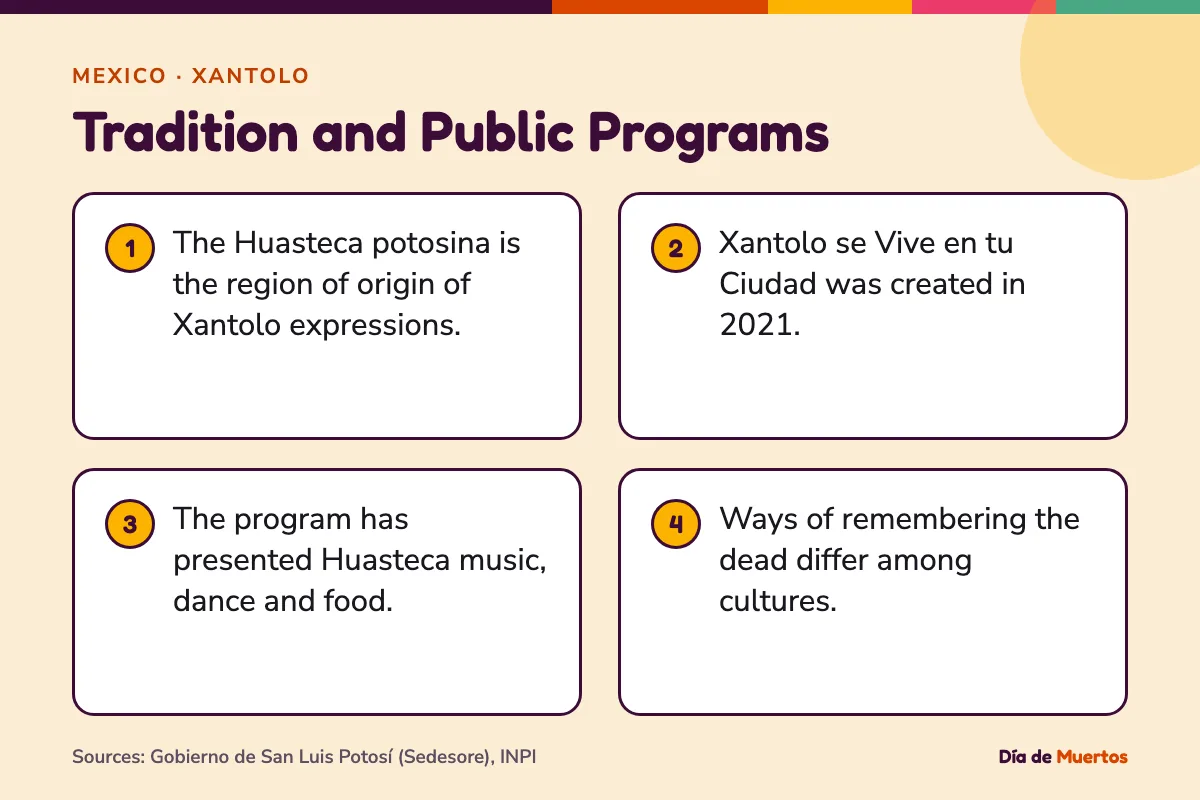
The state government describes Xantolo as a set of expressions tied to the festivities of Todos Santos and Día de Muertos, and it names the Huasteca potosina as their region of origin. That is the starting point: Xantolo is rooted in a particular place and in the communities that keep it.
It is also not one uniform ceremony. Ways of remembering the dead and caring for their souls differ among cultures, and each town marks All Saints in its own way. What one community does is not a template for the next.
"Queremos que las nuevas generaciones conozcan, vivan y se sientan orgullosas de nuestras tradiciones" (Ricardo Gallardo Cardona, governor of San Luis Potosí)
What the state program is
Created in 2021, Xantolo se Vive en tu Ciudad is a state program that presents Huasteca cultural expressions beyond their region of origin. The state's description connects the program with the Altiplano, the metropolitan area around the capital and the Huasteca itself. These are distinct settings within the program's geographic scope, not interchangeable names for the Huasteca.
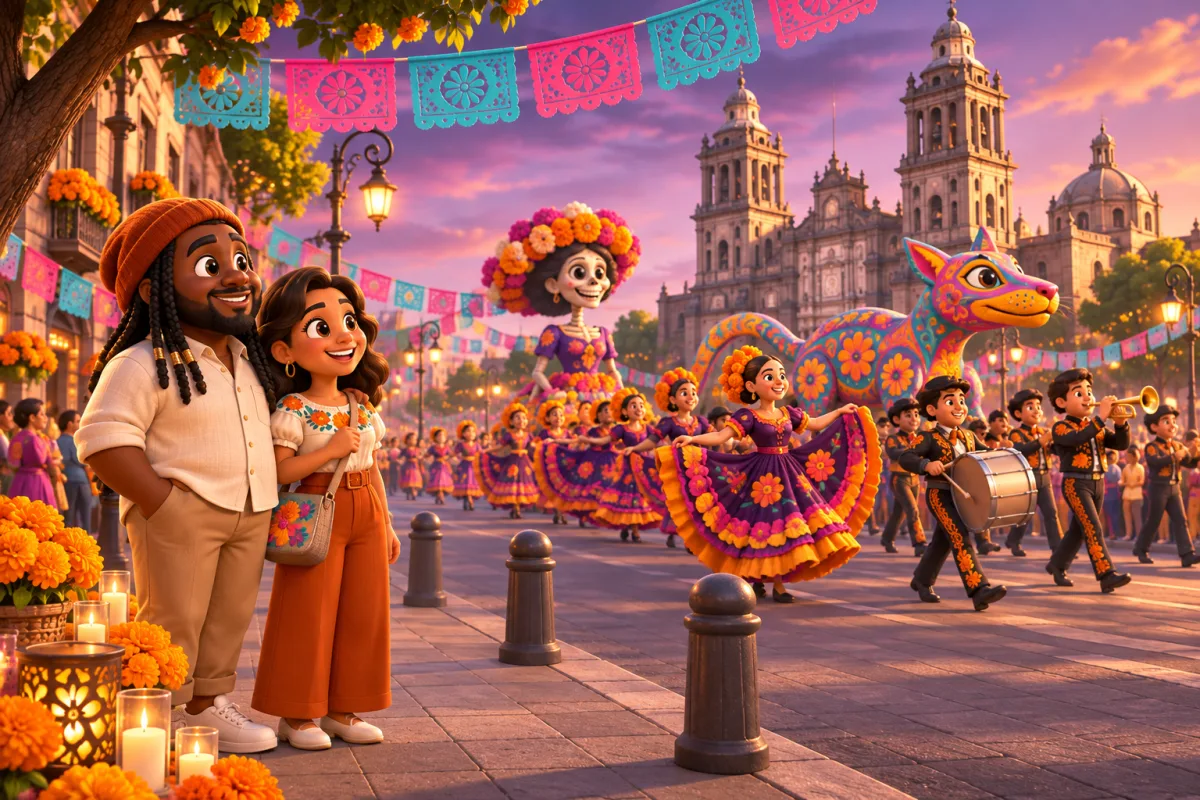
The state says it has let thousands of families get to know music, dance, food, altars, masks, folk art and ritual expressions. Those venues in the Altiplano and the capital area are not Huasteca communities; they are places where Huasteca culture is brought for the public.
Who takes part
The state government names the people who take part in its program: musicians, comparsas, practitioners of traditional medicine, cooks, artisans and other bearers of the tradition. The government credits them with keeping Xantolo alive and passing it from one generation to the next.
For a traveler reading an advertised program, those roles offer different ways to understand the cultural presentation. Music and dance are part of the state's description, but so are cooking, craft knowledge and traditional medicine. Xantolo is not described only as a performance on a stage. The state frames the exchange around respect for cultural differences and recognition of the people who sustain them.
Use those categories to read an activity listing, rather than as a checklist of things every visit will include. A program's broad description is not a guarantee that every kind of participant or expression will appear at a particular venue.
A presentation is not a family's observance
A state-sponsored program and a family's remembrance can share music, food and altars and still be different things. One is organized for an audience. The other is made for the dead and for the relatives who receive them.
A public listing describes the advertised activity, not general access to a community's religious or family life. The presence of an altar or a ritual expression in a state presentation does not turn household altars or cemetery remembrance into public attractions.
How remembrance differs elsewhere
The anthology published by Mexico's National Institute of Indigenous Peoples (INPI) is a reminder of how much practice varies. Its examples come from other regions, not from the Huasteca, so they are not a description of Xantolo.
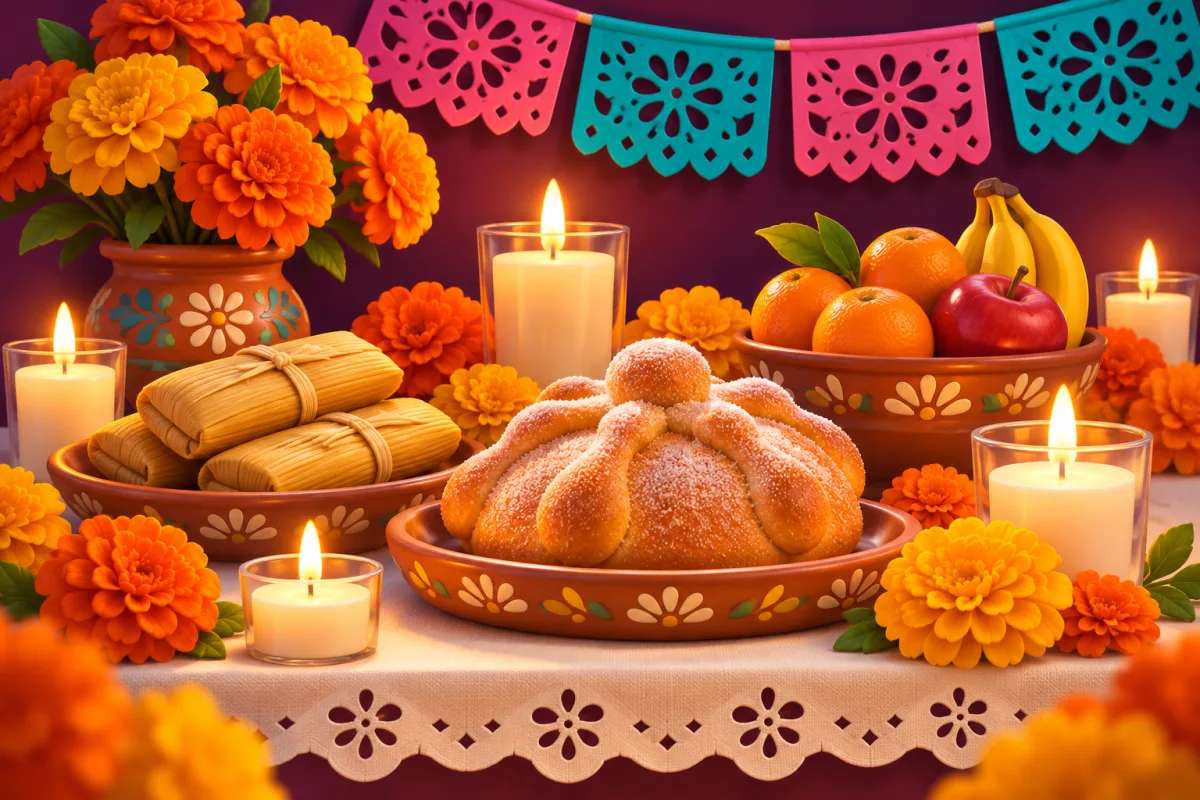
In a Ch’ol community in Campeche, the offering includes xate foliage and flowers, with candles illuminating it. The account lists fruits such as oranges, apples, limes and bananas, alongside vegetables including squash, chayote and cassava. It also describes prayer at the cemetery and a Mass for souls. These details connect the offering with food, belief and remembrance, rather than decoration alone.
In Santa María Tlahuitoltepec, in Oaxaca's Sierra Mixe, the observance is called the fiesta de los abuelos. People put ordinary work aside to remember loved ones with their families. A ritual meal is offered in the home where the deceased lived; mezcal, tepache, bread, tamales, fruit and sweets are among the foods and drinks described. The emphasis is on a reunion of living relatives and the dead, not simply on the appearance of an altar.
Among the Triqui, the offering can be humble: green beans, totopos and water can suffice. The account emphasizes providing something for the returning dead regardless of a household's means. It also describes paired arches decorated with cempasúchil or cockscomb flowers and blessed using water and copal. Candles, seasonal produce, sweets and other foods accompany the offering. The modest meal and the more elaborate decoration belong to the same account; neither supports judging remembrance by how lavish a display looks.
Another anthology account describes a belief that candles light the path of the dead and that returning souls receive nourishment spiritually. It connects preparing the altar with keeping their memory present and gathering as a family. These are beliefs described in that account, not a universal explanation for every altar.
For a Xantolo trip, the distinction is useful: an example from Campeche or Oaxaca can deepen an understanding of remembrance without supplying the meaning of a Huasteca practice. Shared materials such as food, flowers and candles do not make the observances identical.
Before you go
Start with the advertised place: is the activity in the Huasteca, the Altiplano or the metropolitan area? Then identify what is actually offered—a public cultural presentation is a different choice from a family's remembrance. Before booking around an activity, look for a current government announcement and confirm the town and venue; an older program does not establish a future schedule.
At a public presentation, attend as an audience member and ask before photographing performers, cooks or artisans. Household altars and cemetery observances remain family and community spaces. Visitors are guests, need permission and may be told no; a public program does not grant access to them.
Questions readers ask
Where does Xantolo come from?
What does the state program include?
Is every community's Día de Muertos the same?
Sources