If you are choosing where to spend Día de Muertos, Guanajuato city offers something specific: a festival built around its underground street, its plazas and alleys, and a monumental altar on the steps of the state university. Before booking, distinguish the named attractions from the broader festival settings.
These announced activities are in Guanajuato capital, rather than a statewide itinerary. The festival is a public, organized program with its own lineup. It is a different thing from the way families remember their own dead.
A festival with several parts
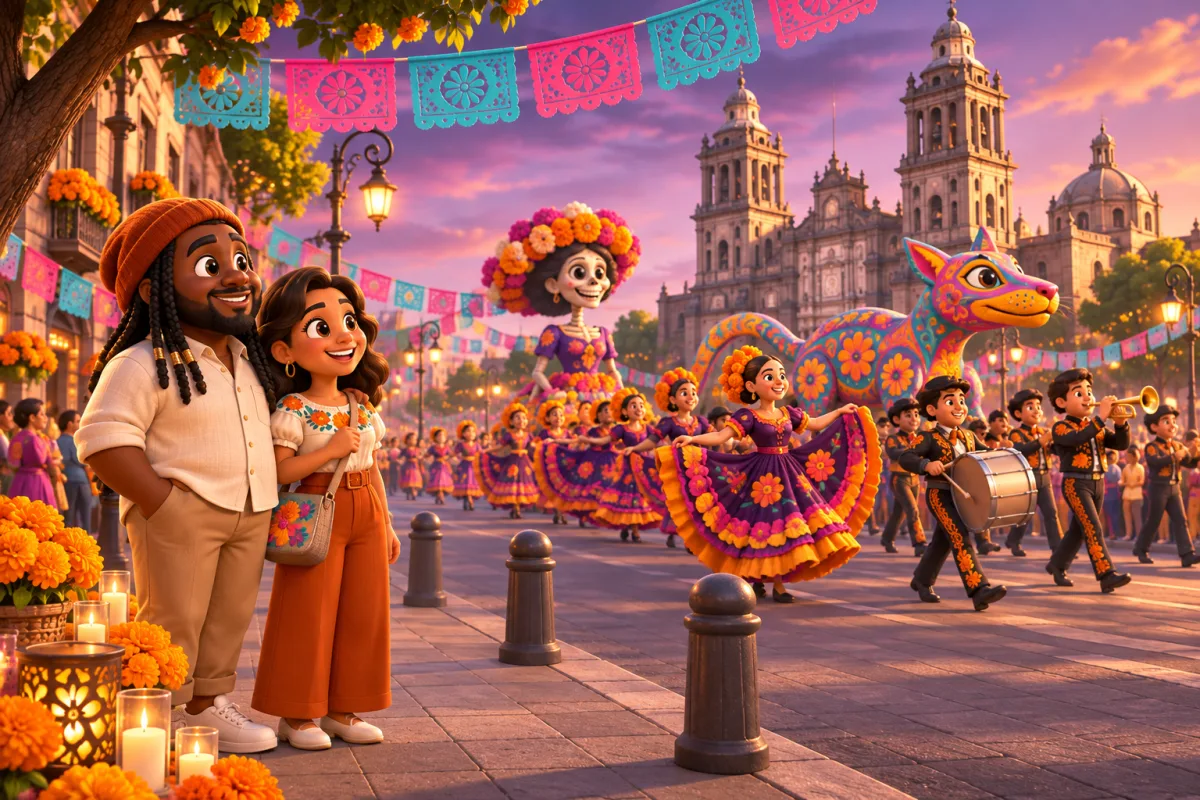
The state government presents the city's celebration as a festival, not a single event. Its tourism office says the Calle Subterránea, the plazas and the alleys of Guanajuato capital become the stage for catrinas, monumental altars, traditional carpets, processions, video mapping, food and crafts. That is a long list, and it spreads across the city.
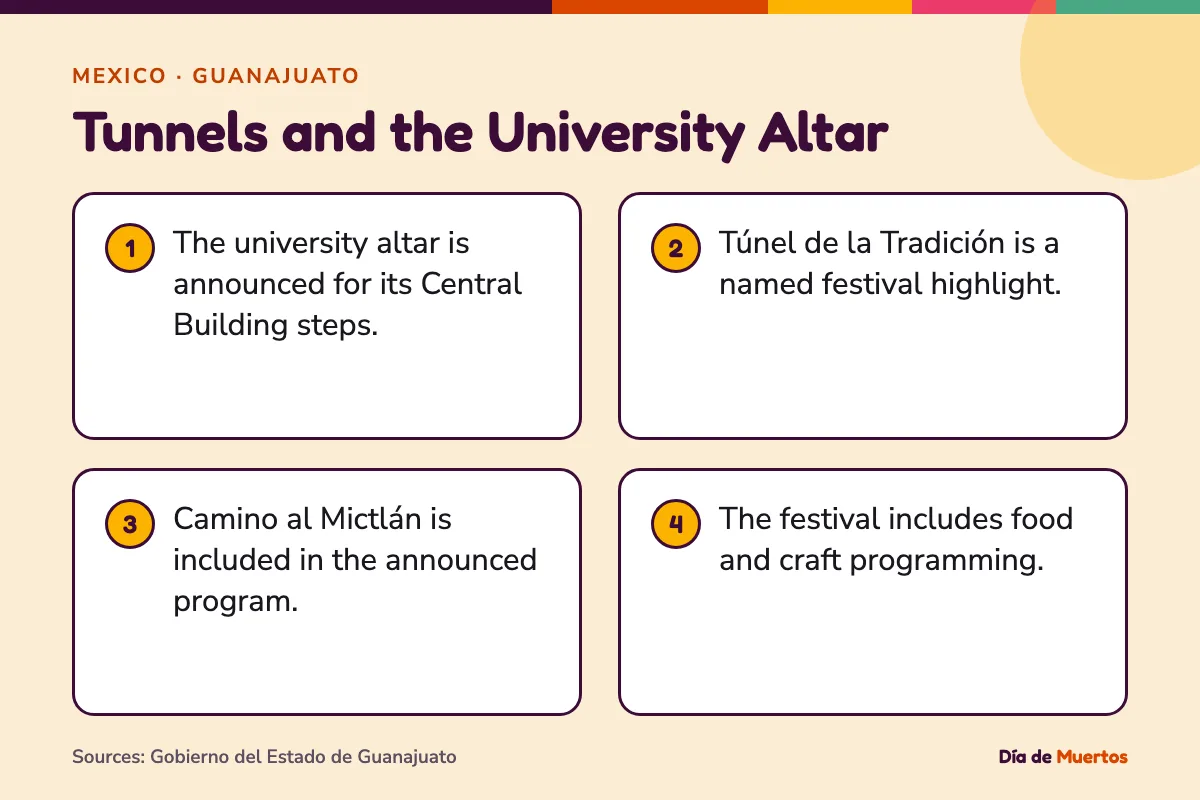
The same announcement singles out a handful of experiences: the Túnel de la Tradición, the university's monumental offering, a parade of catrinas, a screening of the film "El Santo contra las Momias de Guanajuato" at the Panteón de Santa Paula, and the Camino al Mictlán. The announcement is a snapshot of one year's plans. It does not promise that every item returns each year, so the current program is what tells you which ones are on and where.
The announced catrina parade is part of that public program, alongside food, crafts and other cultural activities.
The tunnels and the food
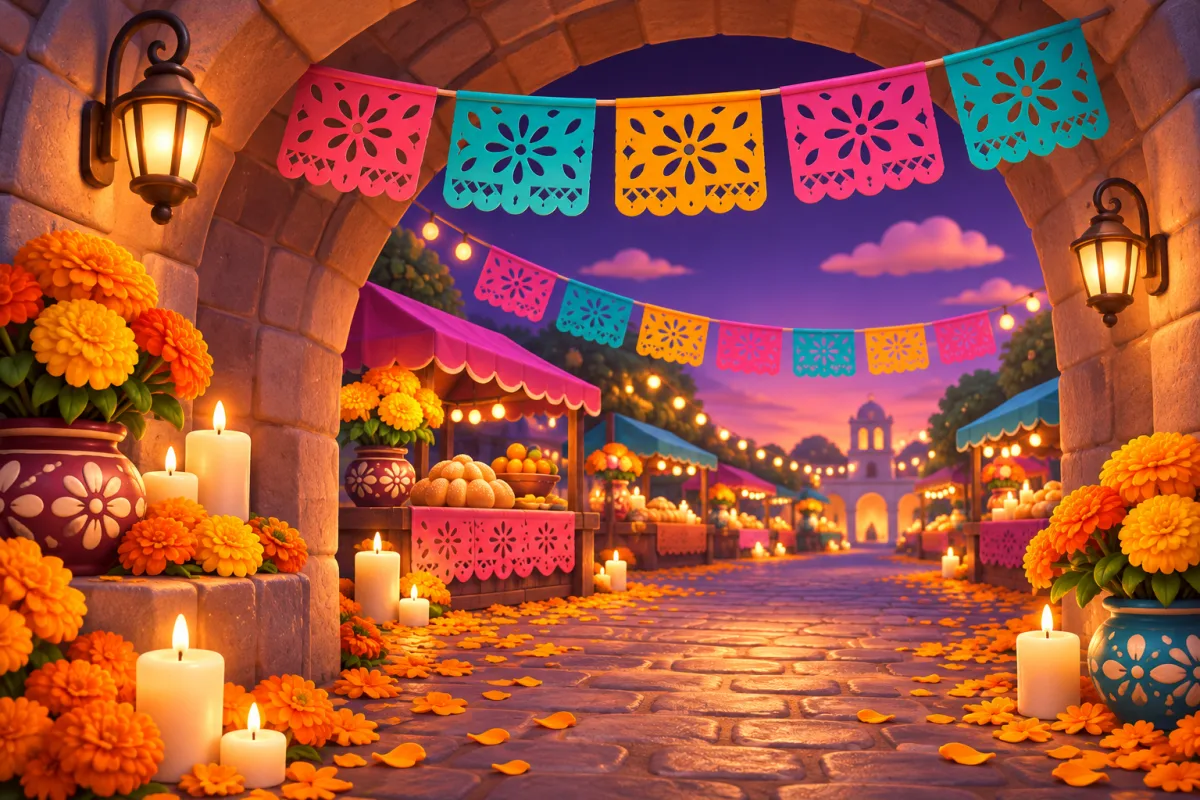
Food is among the announced features of the city's tunnel programming. The state announcement pairs flavors in the tunnels with activities in other city settings; it does not describe the tunnels as the location of every festival experience.
It also names the Túnel de la Tradición among the highlights. What the announcement does not do is describe a route, opening hours or any pedestrian access to the tunnels outside organized events. For a visit, confirm the event entrance and access arrangements rather than using the announcement as permission for an independent underground walk.
The festival also plans space for businesses and artisans. Its food and craft programming offers public activities to consider, but the announcement does not assign every vendor or activity to a particular tunnel.
The University of Guanajuato's monumental altar
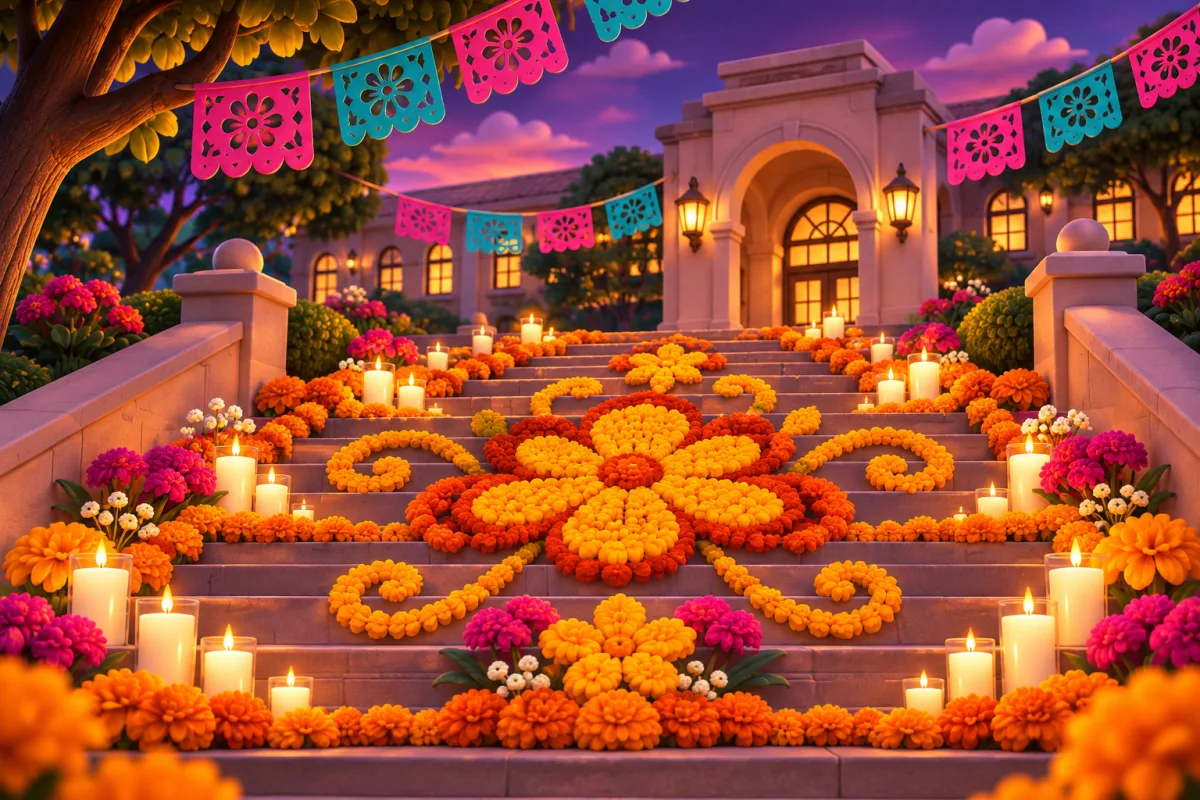
The university altar has a specifically named setting within the festival. The state announcement places the Altar Monumental on the Escalinatas del Edificio Central of the University of Guanajuato, and it lists the Ofrenda Monumental of the university among the highlighted experiences.
The university offering is a named part of the public festival program, distinct from a family's remembrance at home or at a grave. The state announcement establishes its location, but does not explain who designs or installs it.
The announcement lists it for the 2026 festival; check the current program for viewing arrangements. It supplies no individual viewing hours, installation duration or circulation instructions. The named staircase identifies where to look, not when access will be available.
Camino al Mictlán
Camino al Mictlán is another named festival highlight. The announcement supplies no route, meeting point or individual schedule for it. Its name alone is not an itinerary: look for a program description before deciding how it fits with the tunnel events or the university altar.
Offerings and remembrance, apart from the show
The announced festival is a public cultural and tourism program. Offerings and remembrance have longer, varied histories. An interpretation published by Mexico's National Institute of Anthropology and History (INAH) distinguishes Catholic observances from older Indigenous funerary practices.
INAH's article says Día de Muertos is not of pre-Hispanic origin, contrary to a popular idea in Mexico. It says the Nov. 1 and 2 observances began in medieval Europe, instituted by the Catholic Church for All Saints and for the faithful departed, and that they reached Mexico soon after the Spanish conquest.
The article does not say Indigenous remembrance disappeared. It describes a friar writing between 1535 and 1540 who saw offerings for the dead in many Indigenous towns: maize, blankets, food, bread, chickens, and cacao in place of wine. It also says Indigenous communities kept their older funerary practices quietly, and that over time those took on Christian forms until the two traditions largely merged, because both honored the dead.
INAH also notes that pre-Hispanic celebrations had different characteristics and calendars. For the post-revolutionary period, it cites historian Elsa Malvido's interpretation of a shift toward a national, secular character during cardenismo (1934-1940).
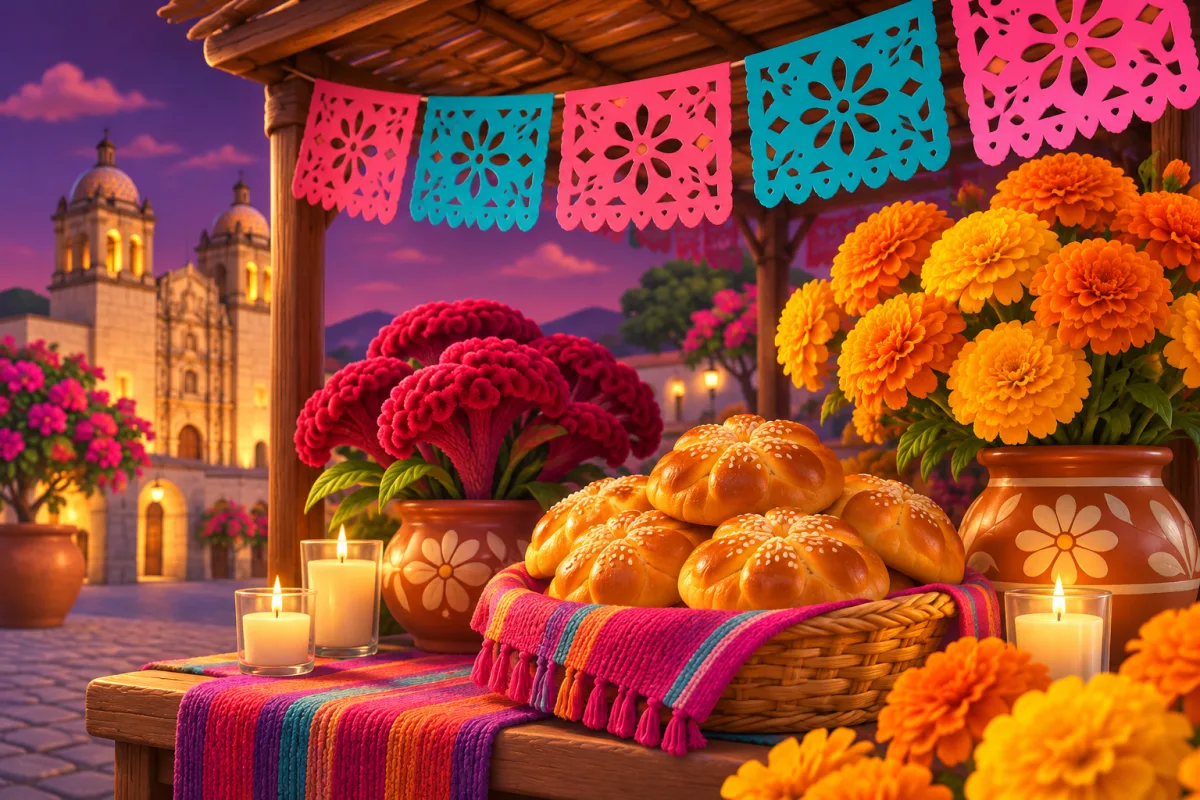
The article describes today's altars, flower arrangements, papel picado and pan de muerto as seeming to evoke the pre-Hispanic world, while many of these elements have antecedents in how the days were celebrated in Europe. That interpretation concerns the wider history of offerings; it does not establish the meaning or design of this university installation.
It also describes a 19th-century habit: whole families went to the cemetery with an offering of flowers, fruit and wax candles, plus a meal to share. That historical account of family cemetery visits is separate from the city's announced festival lineup. A public altar does not make a family's own observance public.
Before you go
Family remembrance can be private. If you come across a family at a grave or a home altar, you are a guest: ask before joining or photographing, accept that the answer may be no, and keep off the altars and graves. The tunnel events, the parade and the university altar are the public side of the celebration.
Before booking, seek the current festival program from the organizers or state tourism office. Confirm the location, timing and entry arrangements for the activities you want to attend. If those details are missing, leave that part of the itinerary open rather than inferring access from an attraction's name.
Questions readers ask
Is the Guanajuato festival the same as a family Día de Muertos?
Where is the monumental altar in Guanajuato?
What do the tunnel events offer?
Sources