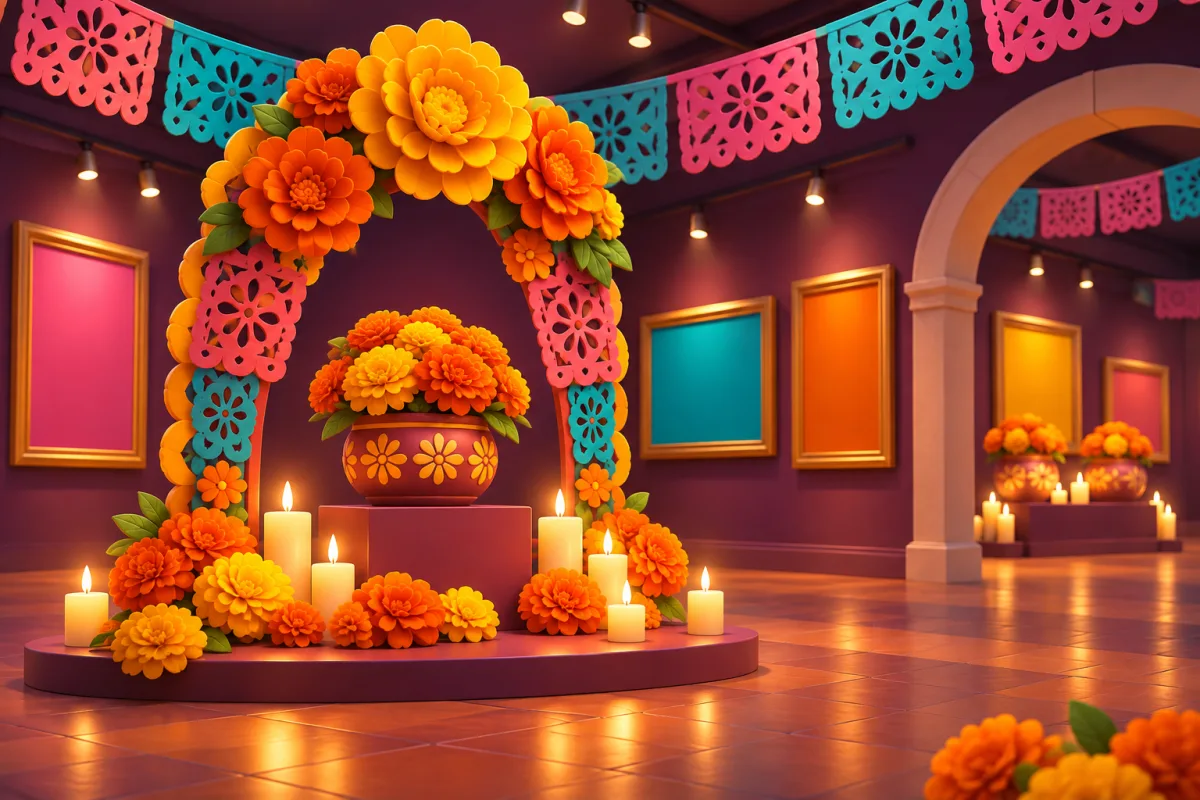
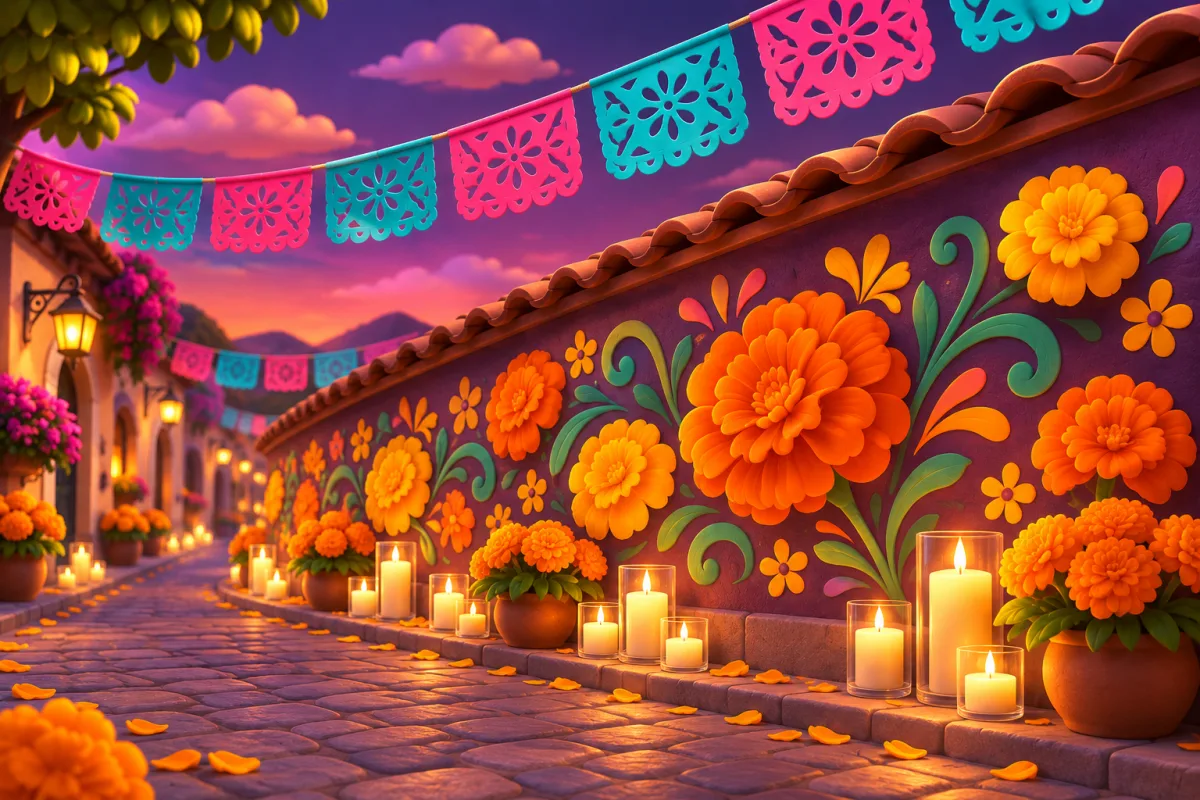
Public Día de los Muertos art in the United States has a history connecting family remembrance with community life. Alongside observances at home and in cemeteries, artists have created installations and celebrations that bring remembrance into shared spaces. A gallery altar and a family's offering can share a theme without serving the same audience.
During the 1970s, Chicano artists and activists helped reshape how the holiday was celebrated publicly. Their efforts connected remembrance with Mexican American cultural identity, while later museum installations and community events brought the observance to broader audiences.
What the holiday marks
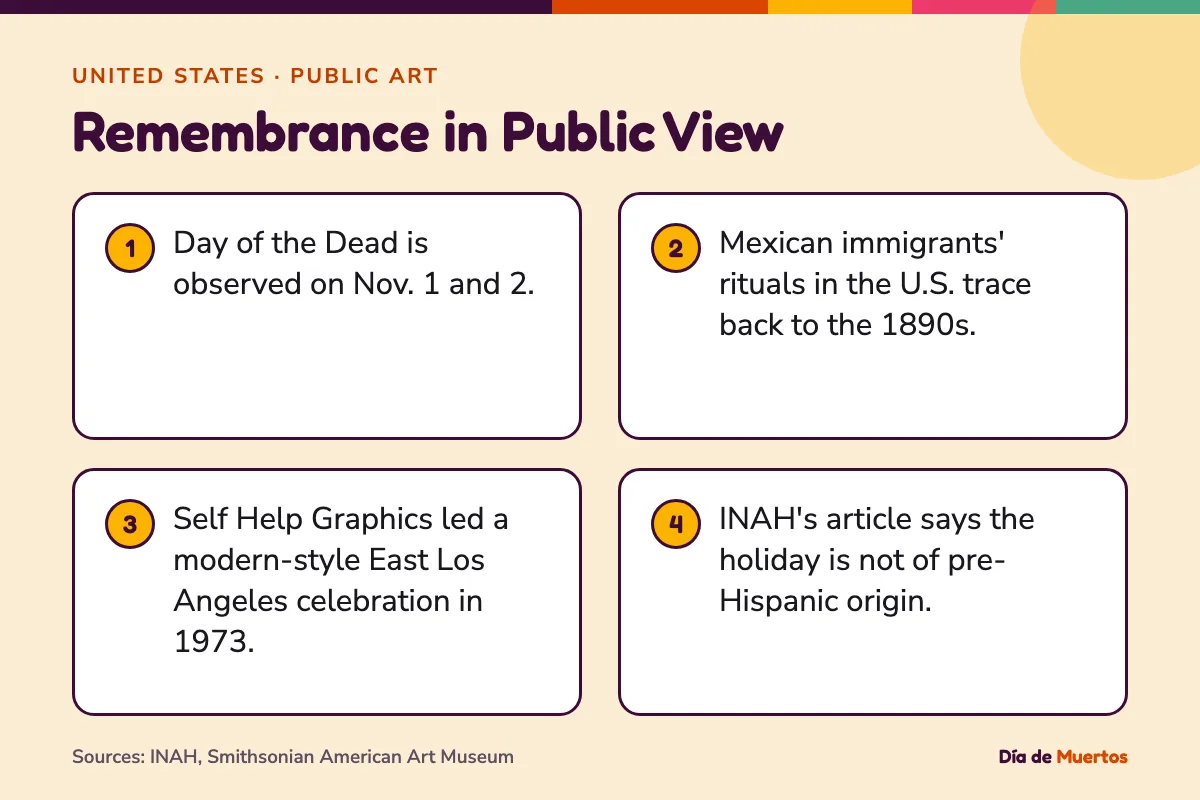
Across Mexico and much of Latin America, Nov. 1 and 2 are days for Día de los Muertos remembrance. The holiday honors those who have died. A central belief holds that departed loved ones come back for a nighttime visit with their families.
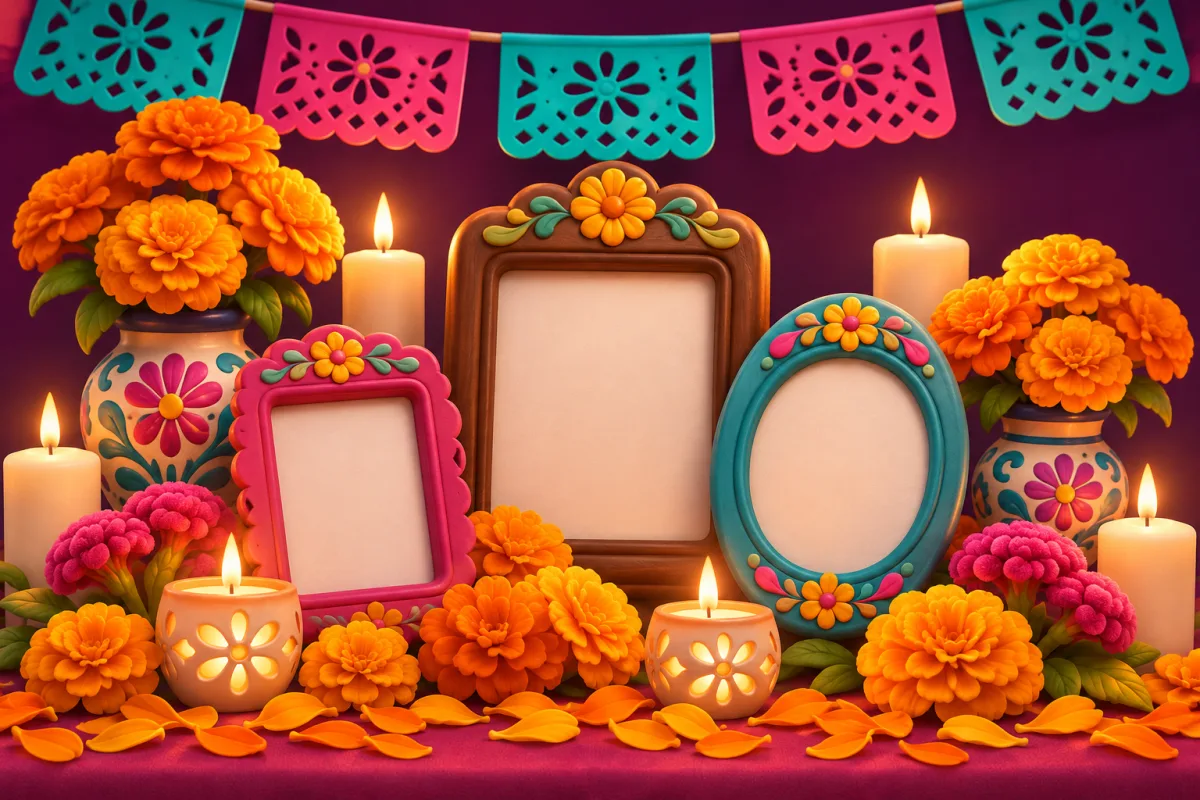
Visits to family graves and the preparation of ofrendas are part of the observance. These altars can include photographs, candles and sweets, along with a loved one's preferred food and drink. Music, dancing and shared meals also give the remembrance a celebratory side.
"It was mostly flowers and candles." (Carmen Lomas Garza, artist)
Quiet beginnings in the U.S.
By the 1890s, Mexican immigrants were bringing Day of the Dead customs to the United States. These observances often centered on religious devotion: families attended Mass, visited relatives' graves and added flowers. They did not include many of the Indigenous elements associated with today's celebrations.
Artist Carmen Lomas Garza recalled cemetery picnics with her family during her south Texas childhood in the late 1950s and early 1960s. Skulls and skeletons were not part of the cemetery scene she remembered. “It was mostly flowers and candles,” Lomas Garza said.
The 1970s turn
For these artists and activists, celebrating Indigenous ancestry offered a way to affirm Mexican American heritage and develop a Chicano identity. Chicano itself had been a derogatory label. Curator E. Carmen Ramos describes its reclamation as an expression of political and cultural pride that rejected pressure to assimilate.
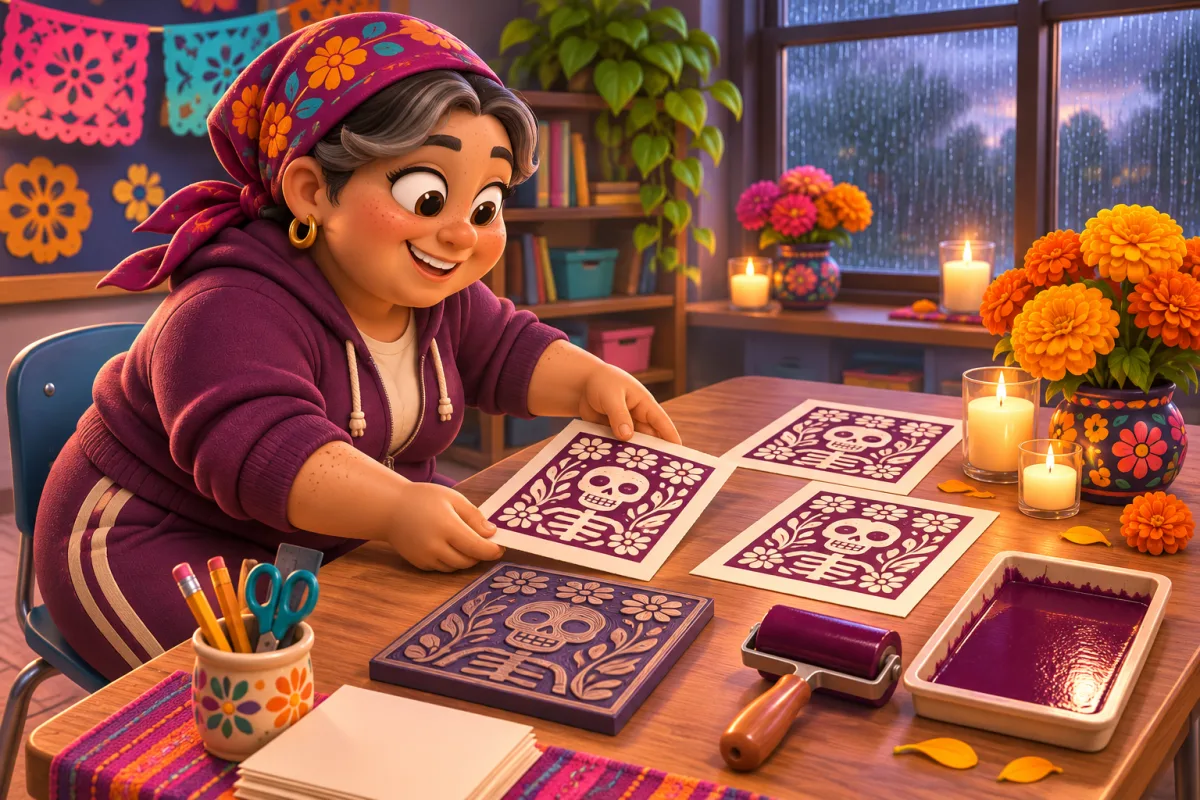
In 1973, East Los Angeles hosted an early example of the public celebrations familiar today. Chicano artists and activists organized it under the leadership of the printmaking collective Self Help Graphics & Art. They deliberately included Indigenous traditions through offerings, a procession and art.
At the procession's cemetery destination, an altar commemorated victims of gang violence. Remembrance thus addressed losses affecting the Chicano community at that time. Later celebrations received contributions from artists such as Ester Hernandez and Judith Baca, as well as members of ASCO.
From the home altar to the gallery
Private family observances continue among Mexican Americans, sometimes with a religious focus. Public celebrations organized by arts institutions and community groups have also grown more common across the United States. These are parallel ways of marking the holiday, rather than evidence that family remembrance has disappeared.
Artists including Lomas Garza created museum and gallery installations and altars to connect with communities beyond the family setting. Meanwhile, stores around the country began carrying goods decorated with calaveras and catrinas. Public art and commercial imagery both became part of the holiday's wider visibility.
Two accounts of where it comes from
Interpretations of the holiday's origins differ. One rejects a pre-Hispanic origin for the November observances, tracing them instead to medieval Catholic Europe: All Saints on Nov. 1 and the faithful departed on Nov. 2. It distinguishes those church observances from ancestral Mesoamerican funerary traditions, which had different practices and dates.
Another interpretation emphasizes Aztec and other Mesoamerican roots and estimates that the tradition is 3,000 years old. In this account, Spanish colonizers shifted an older summer observance to coincide with November's Catholic commemorations. The accounts differ over both origins and how Indigenous and European practices came together.
Before you go
For a museum or gallery display, check the host's own page for current visitor information before setting out; historical examples are not a current exhibition schedule. Give offerings and candles space, leave objects untouched, and ask permission before photographing people. Public celebrations can be festive, while a family's remembrance may call for quiet. An invitation to a public event does not grant access to a home altar or family graveside gathering. Visitors to private observances are guests, and families may decline a request to join.
Questions readers ask
When is Day of the Dead observed?
Why do museums and galleries show Day of the Dead altars?
Is Day of the Dead a pre-Hispanic holiday?
Sources