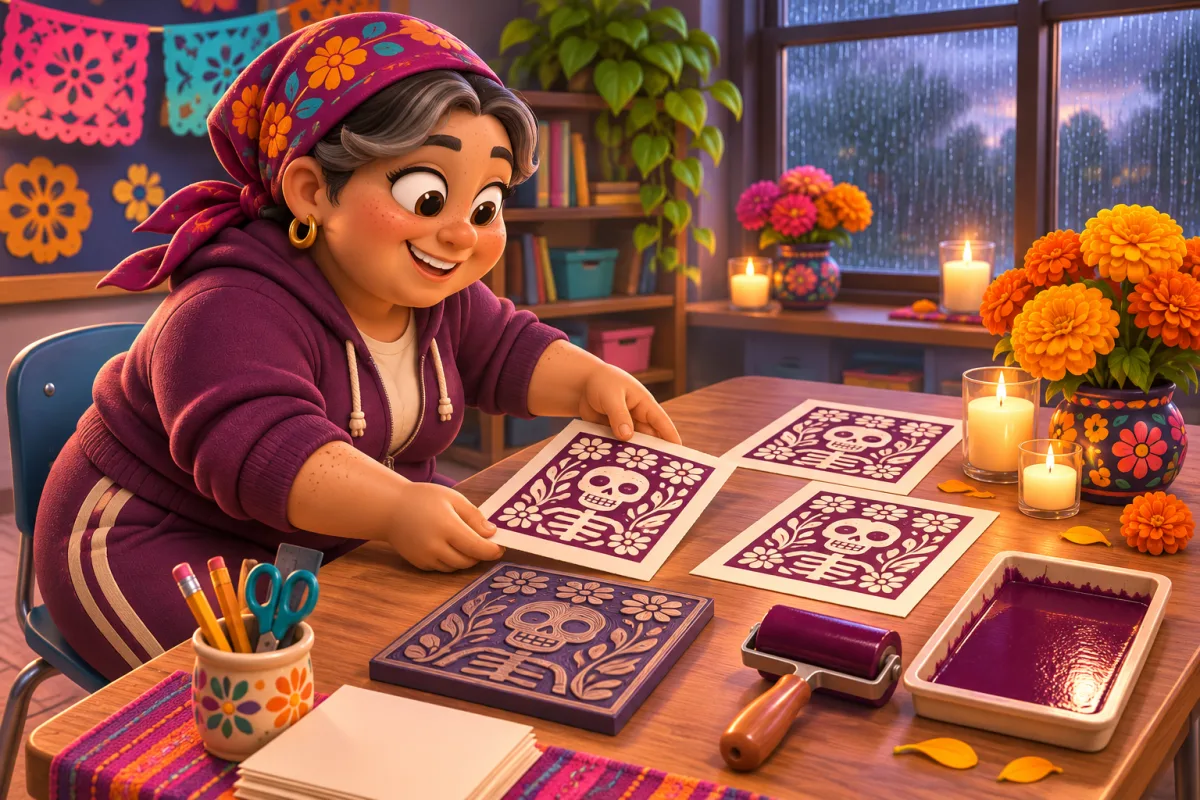
In many Mexican American communities, family remembrance has long been part of the day. Public altars, processions and gallery installations also have a history shaped by Chicano activism and art. Artists helped turn Día de Muertos into an occasion for expressing cultural pride and addressing community concerns, as well as honoring the dead.
For visitors, that history offers a useful distinction. An arts organization's public altar is one expression of the holiday, not a model for every family's observance. Public programs and intimate remembrance coexist, and neither tells the whole story alone.
The background the holiday carries
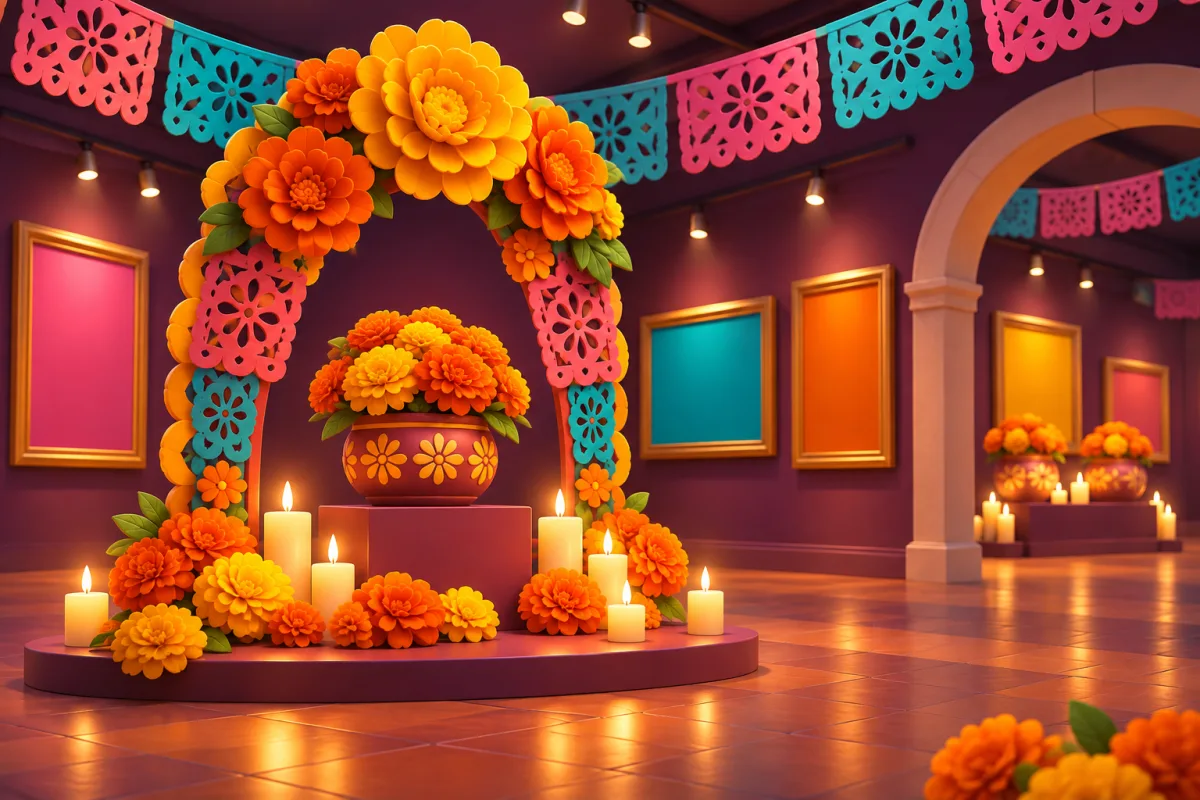
Día de Muertos centers on remembering loved ones who have died. In Mexico, Nov. 1 and 2 bring graveside visits and ofrendas: altars holding family photographs, candles, sweets and favorite refreshments for the returning spirits.
Its roots include Aztec and other Mesoamerican practices. Aztec remembrance extended over a month, with incense, altars and offerings to ancestors. Spanish colonization brought a change in timing: the observance was aligned with the November Catholic feasts of All Saints and All Souls. Indigenous practices and European religion became intertwined.
“I didn’t see any skeletons or skulls or anything like that at the cemetery,” (Carmen Lomas Garza, artist)
Skeletons and the Catrina came from print
Mexican printmaker José Guadalupe Posada helped give the holiday its familiar calavera imagery. Drawing inspiration from skeletons already present in celebrations, he made illustrations for broadsides that also carried humorous writing and poetry. His skeletal politicians and wealthy figures became vehicles for satire.
La Catrina, perhaps his most enduring creation, mocked affluent Mexican women's enthusiasm for European styles before the Mexican Revolution. Elaborate clothing and a feathered hat signaled privilege, in contrast with workers' lives. Beneath that display was an equalizing message: status offers no exemption from death.
Quiet observance in early immigrant families
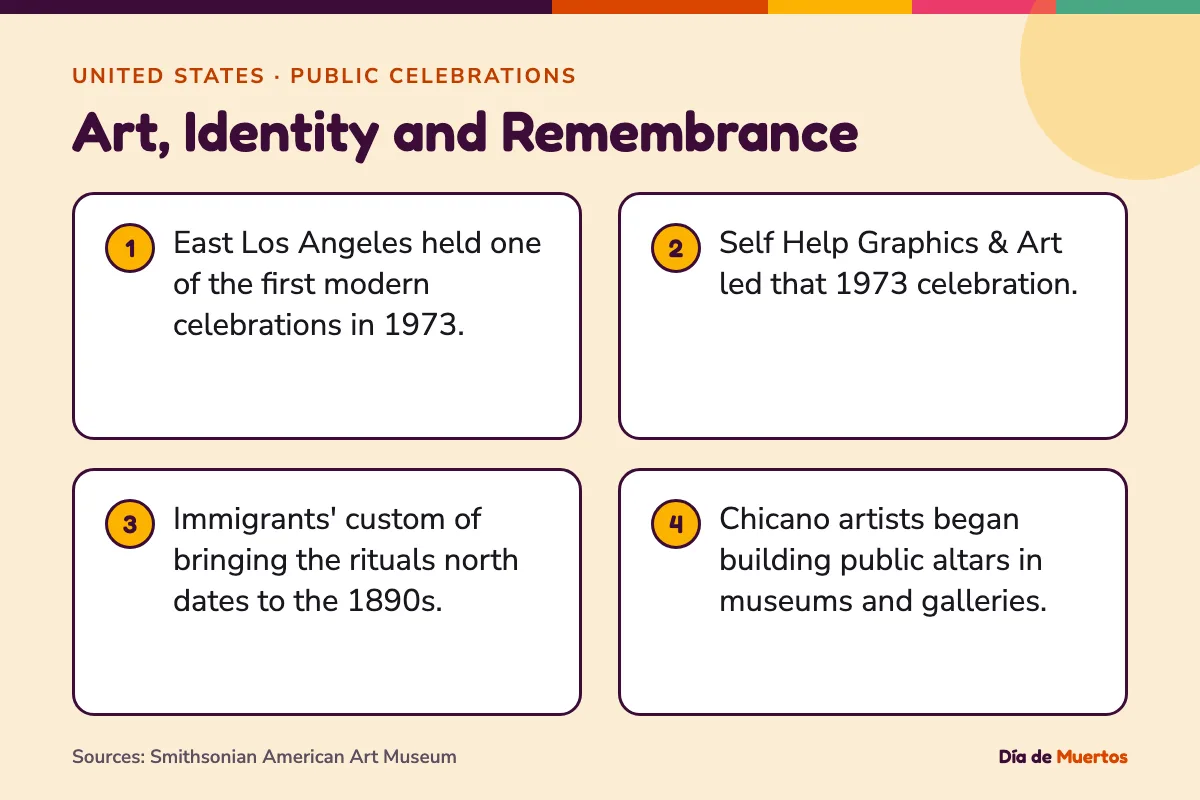
Mexican immigrants carried remembrance customs north by the 1890s. Family observances included Mass, flowers and visits to relatives' graves. These solemn religious gatherings lacked many Indigenous features associated with today's public celebrations.
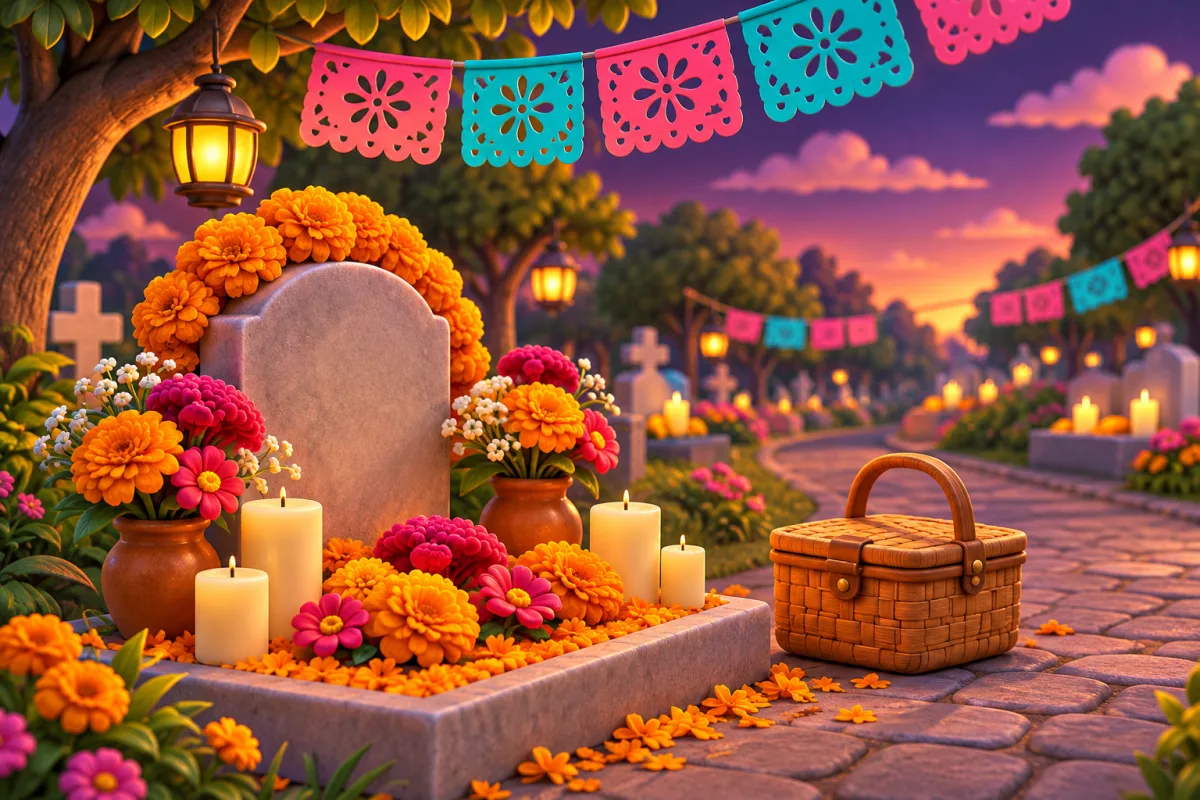
Carmen Lomas Garza's childhood offers a more personal example. In southern Texas, her family marked the day with small gatherings during the late 1950s and into the early 1960s. She later recalled an annual graveside picnic, a practice shared by families on both sides of the border.
Flowers and candles stood out in her cemetery memories, rather than skulls, skeletons or copal incense. Family traditions also became recurring subjects in her artwork. Her recollections illustrate one family's experience, rather than a template for every Mexican American household.
The 1970s: a holiday used to build identity
During the 1970s, artists and activists used Día de Muertos to strengthen a Chicano identity that celebrated Mexican American Indigenous heritage. Large public events gave that cultural and political purpose a shared setting.
This work belonged to a broader movement. Once an insult, Chicano became an affirmative identity that challenged assimilation. Activist artists developed a printmaking tradition connected to campaigns for social justice over more than 50 years. The Smithsonian American Art Museum explored that graphic work in ¡Printing the Revolution! Remembrance and identity-building were connected parts of this artistic history.
East Los Angeles, 1973
In 1973, East Los Angeles hosted an early example of the modern public celebration. Self Help Graphics & Art led the organizing artists and activists. The printmaking collective's role placed an arts organization at the heart of this community event.
Organizers deliberately brought Indigenous practices into the celebration through altars, artwork and a parade. At the procession's cemetery destination, an altar remembered victims of gang violence. Honoring the dead also meant acknowledging a present-day concern in the neighborhood.
Contributors to later Self Help Graphics celebrations included Judith Baca, Carlos Almaraz and Ester Hernandez. Frank Romero participated through Los Four. Among the participating ASCO artists were Patssi Valdez, Willie Herrón, Gronk and Harry Gamboa.
This was one early modern celebration, not a single origin for every public observance across the United States.
From the neighborhood to the museum
Museums and galleries became another setting for the holiday as Chicano artists, including Lomas Garza, created installations and altars for broader audiences. These presentations extended the reach of an observance that also continued within families.
Community groups and arts organizations increasingly host public celebrations around the country. Meanwhile, personal religious customs remain important to many households. Commercial merchandise bearing catrinas and calaveras adds another visible expression, but does not encompass the holiday's family, spiritual or artistic meanings.
Before you go
Look for programs that are plainly described as public, such as an exhibition, a community festival or an arts-center event. Read the host's notes on access and photography before you arrive, since each venue sets its own rules.
A gallery ofrenda and a family's remembrance are different things. If you come across a private gathering or a family at a grave, the people there are remembering their own dead. Ask before you step in or take a picture, and accept a no without argument.
Questions readers ask
How long have Mexican American families observed the day in the US?
What was Self Help Graphics & Art's role in 1973?
What did the 1973 organizers want to bring back?
Sources